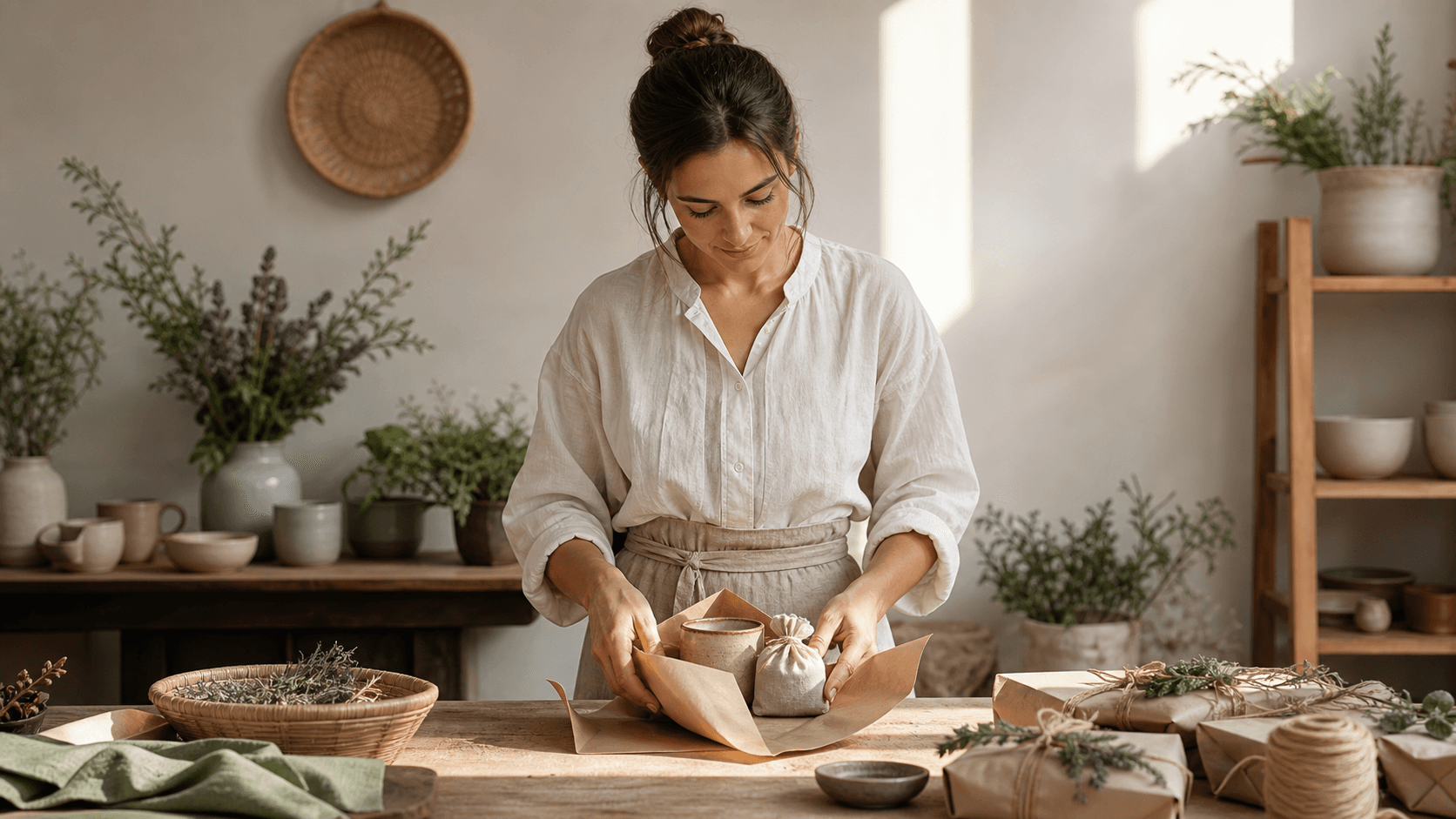
Finding Your Place in the Handmade Community
Starting a handmade business often begins at a kitchen table or in a corner of a spare room, with tools spread out and a half-finished piece in front of you. At some point, a question settles in: is this good enough to sell, and if so, where do I even start? That question matters because where you choose to sell shapes the kind of business you build, how you feel about your work, and who ends up bringing it into their home.
There is a real difference between throwing your work onto a giant, crowded site and joining an authentic handmade marketplace that cares about the person behind the product. In a crowded space, you can feel like just one more listing. In a curated Southern space, your story sits right beside your craft, and shoppers come looking for real makers, not quick trends.
At Main Street Collective, we built our online marketplace for makers across Mississippi and the broader South who want to grow a small, steady business without losing the heart and story in every piece. This guide is for those of us whose hands are already making, who feel that tug to sell, and who want to do it in a way that still feels like home.
Getting Honest About What You Make and Why
Before you think about pricing or photos, it helps to slow down and tell the truth about what you actually make. Is it small batch pottery, hand-poured candles, stitched linens, woodwork, baked goods, or a little bit of mixed media that does not fit a neat label? Naming your craft clearly is the first step to standing steady in a marketplace.
Then comes the bigger question: why are you doing this in the first place? For many Southern makers, that answer sounds like:
- Carrying on a family tradition or recipe
- Wanting slower, more grounded work with your hands
- Loving the history and character of your town
- Helping support your household income in a way that feels honest
Customers in an authentic handmade marketplace are buying that why just as much as the item itself. They want to know whose hands shaped their mug, printed their tea towel, or carved their cutting board. They are drawn to the details that only you can tell.
It can help to sit with a few questions and write down your answers, even if it is just in a notebook at first:
- What story does your work tell about where you are from?
- What details do you never skip, even when it would be easier?
- What part of your process makes you proudest?
Those answers become the backbone of how you talk about your work, both to yourself and to shoppers.
Turning Your Craft Into a Small-Batch Business
Once you know what you make and why, it is time to think about what a small-batch business looks like in real life. Small-batch simply means you are making in limited runs, often in a home studio or small shop, adjusting with the seasons and within what your hands can honestly handle. It is the opposite of a factory line.
A few practical steps help you get ready to sell:
- Choose a small set of products to start with, instead of everything you have ever made
- Test for durability and consistency so pieces hold up to everyday use
- Set prices that respect your time and materials, rather than trying to be the cheapest
Boundaries are just as important as creativity. Ask yourself:
- How many orders can I realistically take in a week without burning out?
- Which items can stay in steady rotation, and which should be one-of-a-kind?
- What holidays or seasons might I plan around, and where are my no-work days?
At Main Street Collective, we look for exactly this kind of intention. We care about makers who know their limits, guard their process, and are not trying to turn their craft into something that feels like a factory. That is what keeps the work honest, and what keeps shoppers coming back for the human side of handmade.
Telling the Story Behind Every Piece
In a curated Southern marketplace, your story is not an extra add-on. It is part of the product itself. Folks want to feel like they are buying from a neighbor, even if they are a few states away, and story is how that connection happens.
A strong maker story usually includes:
- The town or region you are rooted in
- Who taught you the craft or how you found it
- The materials you choose and why they matter
- The slower, less glamorous parts of your process
- What you hope your pieces bring into someone’s home
When you write product descriptions, let them sound like you. Plain, clear language usually carries more weight than fancy buzzwords. Specific details help, such as Mississippi clay, hand-stitched in a Jackson kitchen, or cypress from a local mill. Those are the words that make someone pause and feel a sense of place.
At Main Street Collective, we work to surface those stories with maker bios, vendor features, and photos that show people along with products. We want shoppers to remember the face behind a cutting board or quilt, not just the pretty picture of the item itself.
Choosing the Right Authentic Handmade Marketplace
Not every online marketplace is built for real, small-batch makers. In a noisy, open platform, you can be buried under thousands of nearly identical products. Price and speed tend to win, and it can be hard to hold on to the soul of your craft in that kind of environment.
An authentic handmade marketplace feels different in practice:
- No faceless resellers pretending to be makers
- A real vetting process for products and makers
- Preference for small-batch over bulk production
- A focus on story, place, and relationship, not just on price
Main Street Collective is shaped around Southern makers, with a special love for Mississippi. We are selective about who we bring in and how we present their work, because we want the experience online to feel more like walking down a small-town main street than getting lost in a giant mall.
This matters for makers because:
- You are not competing with mass-produced lookalikes
- Your work sits beside other thoughtful, story-rich goods
- Your story is treated with care, not just as a quick marketing hook
That kind of environment lets your craft breathe. It also attracts shoppers who are already looking for the slower, more human side of handmade.
How Main Street Collective Supports Southern Makers
From the maker’s side, joining Main Street Collective starts with an application that asks about more than product lists. We want to know your story, your process, and how your work is tied to the South. That context helps us understand where you fit in the larger table of makers we are setting.
Being part of a curated community instead of a massive platform means you are known by name. Your work is not just uploaded, it is chosen. We look for ways to support you with:
- Thoughtful photography and storytelling that feel true to you
- Guidance on what tends to resonate with a Southern audience
- Seasonal features that highlight timely pieces and traditions
- A shared commitment to slower, more intentional shopping
When shoppers come to Main Street Collective, they are seeking exactly what our makers offer: real Southern goods, made in small, careful batches by people whose names and towns they can learn.
Taking Your First Step From Maker to Seller
You do not have to have everything perfect to start. You only need honest work, a clear sense of what you make, and a willingness to share your story out loud. Perfection can wait. Authenticity should not.
A simple way forward might look like this: choose your best pieces, write your story in your own words, and take photos that show both the item and a bit of your world. Then, when you feel ready, explore how Main Street Collective welcomes new makers from across the South who are walking the same path.
In the end, selling in an authentic handmade marketplace is less about chasing every new trend and more about letting your craft find its place at the Southern table. We believe there is room for careful hands, small batches, and story-rich goods, and that your work might just belong alongside the makers already gathered there.
Grow Your Artisan Brand With a Community That Shares Your Values
If you are ready to reach more customers who truly value craftsmanship, join our authentic handmade marketplace and become part of the Main Street Collective community. We make it easy for independent makers to showcase their work alongside like-minded artisans while keeping the focus on quality and story. If you have questions about getting started or need help with the next step, feel free to contact us.
Frequently Asked Questions
What is a small batch handmade business?
A small batch handmade business makes products in limited runs, usually in a home studio or small shop. It focuses on what your hands can realistically produce with consistent quality, rather than mass production.
How do I know if my handmade items are good enough to sell?
Start by testing for durability and consistency so your pieces hold up to everyday use. If you can clearly name what you make and repeat the same quality across multiple items, you are in a strong position to sell.
What is the difference between a big online marketplace and a curated handmade marketplace?
A big marketplace is crowded and your products can get lost among thousands of similar listings. A curated handmade marketplace typically highlights real makers, their stories, and intentional small batch work, which can attract shoppers looking for authenticity.
How should I choose what products to sell first in my handmade shop?
Pick a small set of items you can make reliably and enjoy producing, instead of launching with everything you have ever made. Starting with a focused lineup makes it easier to keep quality consistent and manage your time.
How do I price handmade products without undercharging?
Price your work to cover materials and the time it takes to make each piece, not to be the cheapest option. Setting prices that respect your labor helps keep your business sustainable and prevents burnout.