
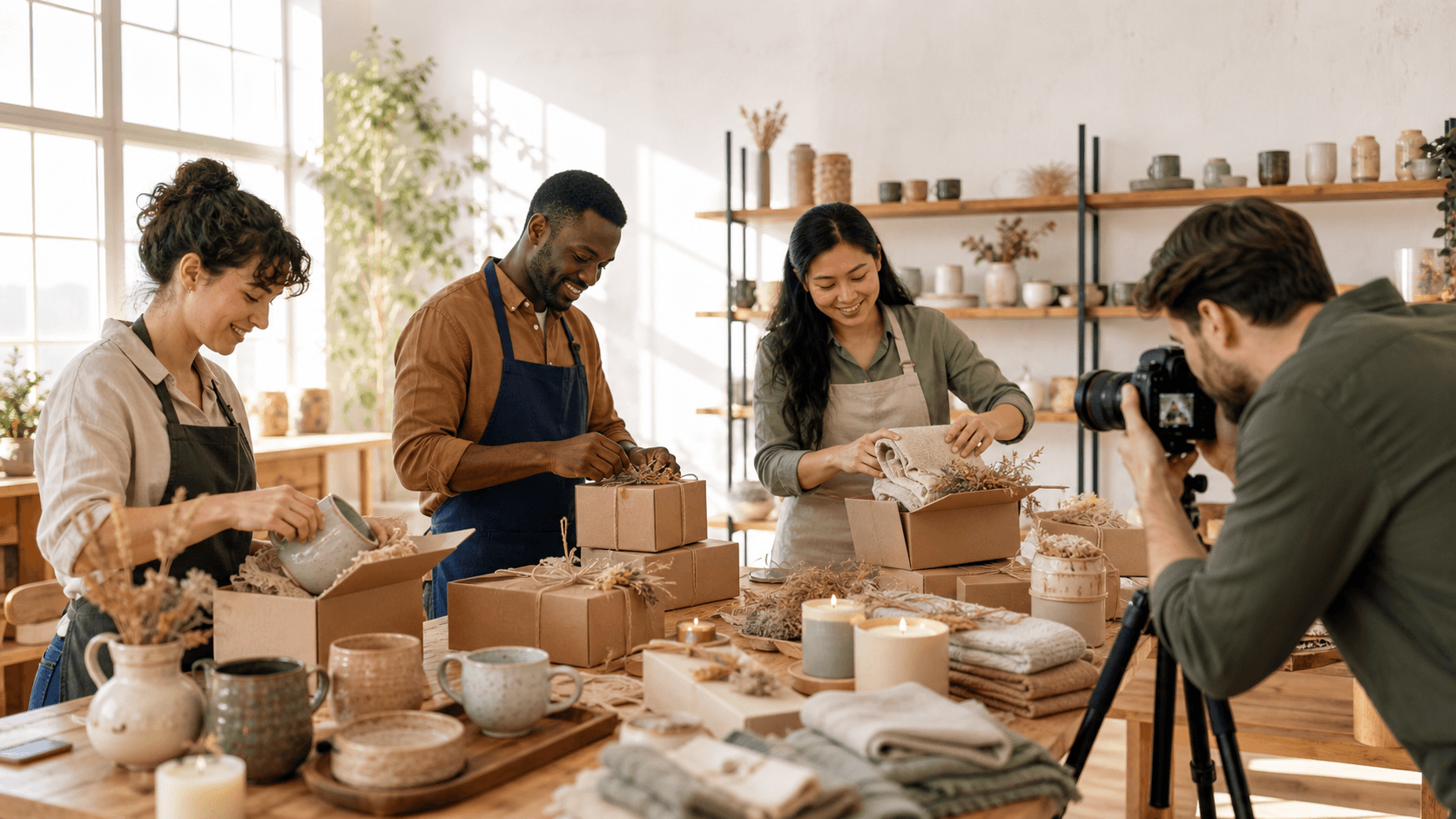
Understanding the Heart of an Authentic Handmade Marketplace
Holding a handmade piece changes how we see our everyday things. A mug warms your hands differently when you know someone shaped the clay, trimmed the handle, and chose that particular shade of blue because it reminded them of a river back home. A cutting board or candle feels less like an object and more like a small piece of another person’s life that you get to borrow.
That is the heart of an authentic handmade marketplace. It is less about filling a cart and more about relationship, memory, and place. At Main Street Collective, we built our online home out of a love for Mississippi and the wider South, and a desire to keep those stories close to daily life, even when you are just pouring coffee or lighting a wick at the end of a long day.
What Makes a Marketplace Truly Authentic
Not every site with pretty photos and the word “handmade” is rooted in real makers and real places. An authentic handmade marketplace feels different because you can sense the people behind what you are holding. It is slower, more personal, and it is comfortable saying “this was made by a human being, not a machine in a distant warehouse.”
We think authenticity shows up in details like these:
- Knowing the maker’s name, not just the product name
- Seeing their town or region, not just “made somewhere in the USA”
- Reading why they started making what they make
- Noticing small quirks, like a thumbprint in the glaze or a knot in the wood
- Feeling that the maker would be proud to see you use their work
A site that only “looks handmade” tends to smooth out all those edges. Everything is uniform, the descriptions sound copied and pasted, and you never quite learn who is behind it. In an authentic handmade marketplace, a plate might be a bit oval instead of perfectly round, a stitched line might wander slightly, and the materials might be gathered from local land and scrap piles. Those choices are not flaws; they are proof that this thing passed through caring hands.
The Southern Roots of Handmade Traditions
In the South, handmade often started as survival, not trend. People quilted to keep warm when winters were longer and money was shorter. They canned to stretch a garden harvest, smoked and seasoned meat to make it last, built their own tables because the store-bought version was too far away or too expensive.
Over time, those practical skills turned into something deeper. The quilt patterns carried the memory of a grandmother’s favorite colors. The recipes scribbled on old envelopes held church potluck secrets. The whittling done on a front porch turned into real woodworking, with carved details that echoed local stories and sayings.
Across Mississippi and the wider South, place still shapes what people make:
- River towns give rise to blues-inspired art, water-worn colors, and boatwood textures
- Delta farmland shows up in cotton motifs, field greens, and earthy clay
- Piney woods bring turned bowls, carved spoons, and resin that smells like walking through trees
- Coastal communities carry sea glass, driftwood, and breezy palettes that feel like salt air
When you hold a handmade piece from our corner of the world, you are often holding layers of that history, even when the design is modern and clean.
How We Find and Honor Makers
We meet many of our artisans the way neighbors meet each other, by simply showing up where they already are. That might be a small-town festival with booths down the main street, a farmer’s market under string lights, a church hall craft fair, or a casual conversation over a table filled with pottery, prints, or carved boards.
From there, our work is about care more than anything else. We look for makers whose pieces clearly come from their own hands and stories, not from anonymous factories or bulk orders. We listen for the “why” behind their work, because that often tells us as much as the object itself.
Honoring those makers means:
- Paying fairly for what they create
- Giving clear credit, so their name and town stay attached to their work
- Letting them speak in their own voice in product descriptions and photos
- Showing their pieces the way they were meant to be used
An authentic handmade marketplace should feel like a long conversation between makers and the people who live with their work. Our job is to keep that conversation honest and respectful.
Why Handmade Still Matters in a Fast World
It is easy to fill a home with things that mean nothing. A late-night order, a quick click, a box on the porch a day later, and then that item ends up forgotten in a cabinet or closet. The speed feels convenient, but it rarely leaves a lasting mark on your life.
Handmade offers another way. When you choose a serving board from a small-town woodworker, a print from a Southern painter, or a hand-poured candle that smells faintly like your childhood kitchen, you are choosing to live with fewer things that matter more. You remember where that board came from every time you slice tomatoes on it. You think of the painter when you walk past the print in your hallway.
There is also a quiet kind of local pride in it. Buying from an authentic handmade marketplace keeps money closer to the hands that actually did the work. It supports families, helps keep main streets alive, and adds a small bit of weight to old buildings that someone is trying hard to bring back to life with new ideas.
Choosing Pieces That Feel Like Home
Shopping an authentic handmade marketplace works best when you slow down. Instead of skimming photos and prices, make time to read the maker stories. Notice what details tug at you, what towns or materials catch your eye, what reminds you of a person, place, or season of your own life.
A few gentle ways to shop with intention:
- Ask, “Who made this, and what part of their story do I want to honor?”
- Pick pieces that echo a memory, not just a color scheme
- Consider buying from the same potter or woodworker over time, to build a connection
- Gift items from towns or states that shaped the person you are gifting to
Think in terms of connection, not collecting. It is not about owning every style or filling every shelf. It is about finding the pieces that feel like home to you, whether you grew up in the South or are simply drawn to its slower pace, crowded tables, and careful way of looking after what has been made.
Bringing Southern Makers Into Your Everyday Life
You do not have to change your whole house to welcome handmade into your world. Start small. Swap one mass-produced item you use often, maybe a mug, cutting board, or candle, for something made by a Southern artisan with a story behind it. See how it feels to reach for that piece day after day.
When you explore the artisans gathered through Main Street Collective, we hope you will treat it less like a catalog and more like a community spread out across Mississippi and the wider South. Every handmade piece you bring home is quiet support for a maker’s craft, for a town’s main street, and for a way of living that still believes time, care, and honest work are worth holding onto.
Discover Handmade Pieces That Truly Reflect You
Explore our authentic handmade marketplace to find one-of-a-kind creations crafted with care by real artisans. At Main Street Collective, we carefully curate every piece so you can shop confidently, knowing the story and skill behind what you bring home. If you have questions, need a custom recommendation, or want to collaborate on something special, contact us and we will be happy to help.
Frequently Asked Questions
- What is an authentic handmade marketplace?
- An authentic handmade marketplace is a place where items are actually made by individual makers, not mass produced in a factory. It emphasizes the maker’s story, their region, and the real, human details that show up in the finished piece.
- How can I tell if something is truly handmade online?
- Look for clear information about the maker, including their name, location, and why they create what they make. Real handmade items often show small variations like a slightly uneven shape, visible tool marks, or natural wood grain, instead of perfect uniformity.
- What is the difference between handmade and mass produced products?
- Handmade products are created by a person using hands on processes, so each piece can have minor differences and unique character. Mass produced products are made in large quantities to be identical, often with limited information about who made them or where they came from.
- Why do handmade goods often have small imperfections?
- Small quirks like a thumbprint in glaze or a knot in wood are common because the work is shaped, stitched, or finished by hand. Those details are usually signs of human craftsmanship and individual materials, not defects from poor quality.
- How do handmade traditions in Mississippi and the South influence what makers create today?
- Many Southern handmade traditions grew from practical skills like quilting, woodworking, and preserving food, which evolved into lasting art and craft practices. Local place and history still influence styles, colors, and materials, including river town blues tones, Delta earthiness, piney woods textures, and coastal driftwood palettes.