Why Your Laser Tools Matter for Handcrafted Work
Choosing a laser cutter is really about choosing how you want to work. If your days are already full of sawdust, stain rags, and a notebook full of hand-drawn sketches, the right laser should slide into that rhythm, not boss you around or blow your budget. For Southern makers building a handcrafted business out of wood, leather, and a bit of grit, the tool you pick will shape what you can say yes to and how confidently you can say it.
At Main Street Collective, we spend our days talking with small makers across Mississippi and the South who blend hand tools with modern tech. We see laser cutters humming in the corner of downtown studios, in backyard sheds, and in spare bedrooms doing double duty as workshops. In this guide, we will walk through power, precision, and safety in plain language, so you can choose a laser setup that supports your handmade work instead of fighting it.
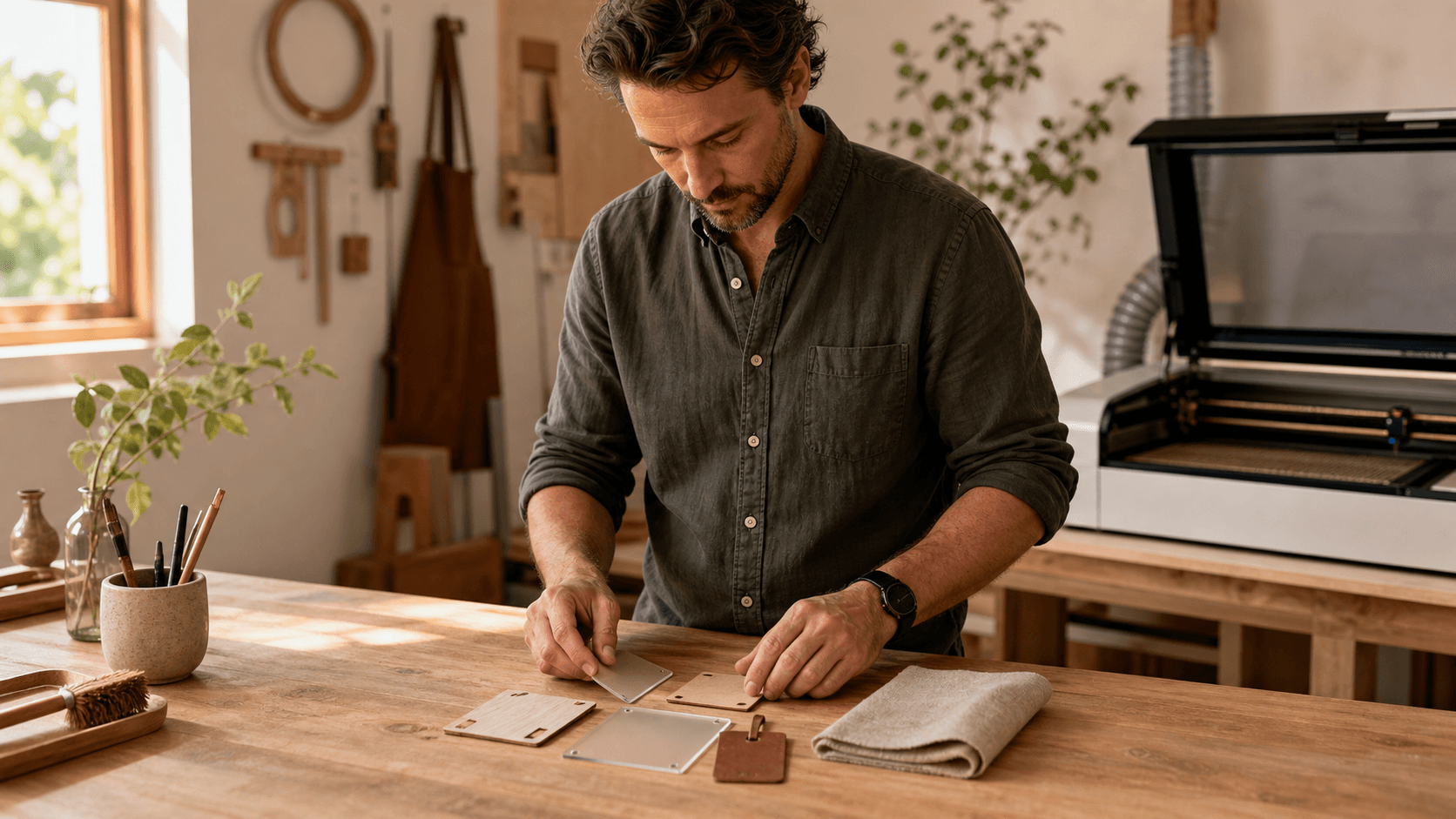
Think of a real working shop: sawdust hanging in the air, a sander on one bench, a stack of half-finished signs on another, and a laser quietly tracing script letters in a corner. Laser cutting is just focused light that burns or melts material along a path you draw on a computer. It does not replace your scroll saw, carving tools, or paintbrushes. It simply gives you clean lines, tiny details, and the ability to repeat a design without starting from scratch each time.
For Southern handcrafted goods, that matters. You can:
- Cut delicate script lettering that would split on a scroll saw
- Run small batches of ornaments or tags that all match
- Test a new design without wasting an entire sheet of expensive hardwood
The “right” laser is not always the biggest one in the catalog. It is the one that fits your space, your materials, your pace of orders, and your comfort level with maintaining a machine.
Power That Matches Your Materials and Your Space
Laser power usually shows up as watts on a spec sheet, but what you care about is what it can actually do to the materials that tell your story. Many Southern makers work with:
- Thin Baltic birch and hardwoods for signs and ornaments
- Veg-tan or finished leather for tags, belts, and patches
- Acrylic for logos, cake toppers, or inlay accents
- Coated metals for marking, like tumblers or tags
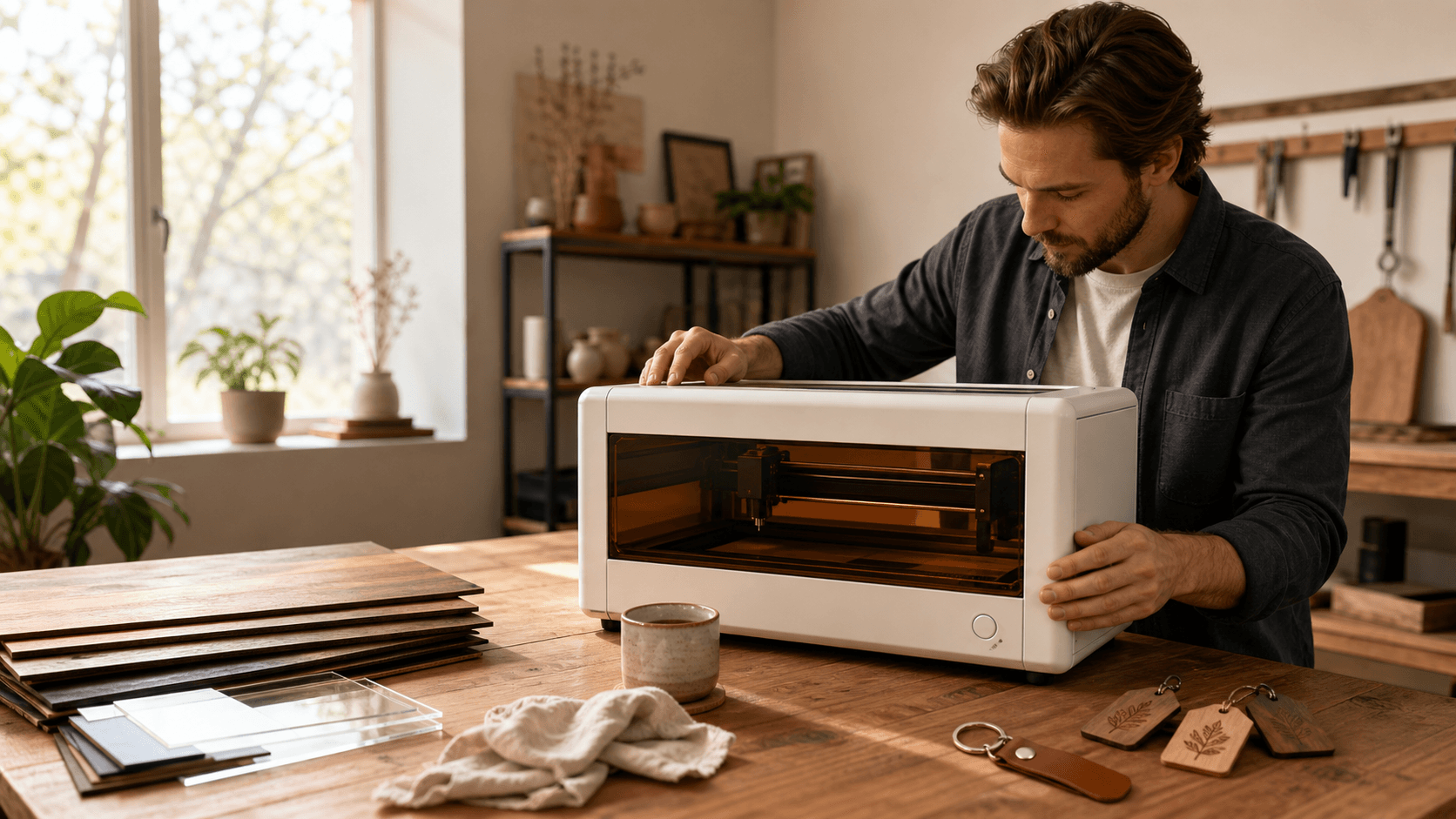
A lighter desktop laser, often on the lower watt side, can usually:
- Cut thin plywood and MDF
- Engrave leather, acrylic, and coated metals
- Struggle with thick hardwoods or very fast production
A higher powered shop unit can:
- Cut thicker hardwood and dense materials
- Run faster on repeat jobs
- Demand stronger ventilation, more electrical capacity, and more noise tolerance
Here is where honest questions help more than spec sheets:
- What are you making right now, week in and week out?
- What do customers keep asking for that you currently turn down?
- Which “someday” materials are real goals versus passing curiosity?
If almost everything you sell is small signs, keychains, ornaments, or leather tags, it may not make sense to buy a monster machine built to chew through thick slabs all day. Choosing enough power to comfortably handle your regular handcrafted goods, plus a little room to grow, usually beats buying more power than your space, budget, and electrical panel can comfortably support.
Do not forget the home factor. A more powerful machine might:
- Need a stronger exhaust system that actually reaches outside
- Prefer a dedicated circuit on your breaker box
- Run louder, which matters in a spare bedroom or shared wall situation
Power is not just what you can cut; it is what your space can support without constant frustration.
Precision, Repeatability, and the Look of Your Work
When makers talk about precision, they are rarely thinking in thousandths of an inch. They are thinking about:
- Script fonts with clean, unburned edges
- Inlays that drop in with a light press, not an hour of sanding
- Engravings that look the same from piece 1 to piece 12 in a batch
Several parts of a laser affect this: the type of laser tube, the quality of the lens, and the smoothness of the motion system that moves the beam. You do not need to be an engineer to care about those details. What matters is how they show up in your work.
Better optics and smoother rails usually mean:
- Less wobble in small letters
- Fewer fuzzy edges on acrylic and wood
- Cleaner engraving on leather and coated metals
Repeatability is a different kind of promise. When you tell a bride you will make a dozen matching place settings, or agree to a wholesale run of branded keychains for a Main Street shop, the laser needs to return to the same spot over and over without drifting. That repeatability keeps your handcrafted work consistent without feeling mass-produced.
Precision is not just a technical detail, it is part of your brand. If your style leans into delicate flourishes, detailed maps, or very clean typography, a cheaper machine with sloppy motion will show its limits in every photo and in every customer’s hands.
Before you commit, try to:
- Bring your real materials to a demo if possible
- Ask for test cuts and engraves in the sizes you actually use
- Check how pieces look after a light sanding, oiling, or clear coat
How your work looks finished is what your customers see, not how it looked on the machine bed.
Safety Is Part of Taking Your Craft Seriously
For handmade businesses rooted in care, safety is not about fear. It is about respect for the tools, the building, and the people around you. A laser cutter is basically a controlled fire in a box. Treating it like a shop partner, not a toy, is part of being a professional.
Start with the basics:
- Ventilation that actually moves smoke and fumes out of the room
- Awareness of fire risk with resin-heavy woods, fabrics, and stacked materials
- Simple protective gear like safety glasses when cleaning, and a mask if you are sanding smoky edges
Most modern hobby and shop lasers come with safety features described in plain terms:
- Enclosed cabinets that keep the beam and most smoke contained
- Lid sensors that stop the laser if someone opens the cover
- Emergency stop buttons that kill power fast
- Interlocks that refuse to fire if something is open or misaligned
Experienced makers we talk with pay attention to little warning signs:
- Lingering smell hours after a cut is done
- Scorch marks or melted spots on the machine bed
- Soot or residue collecting on lenses, mirrors, and vents
- Materials like PVC or unknown plastics that should never go in a laser at all
If you are in a shared building, a downtown storefront, or a small-town studio, safe habits protect more than your inventory. They protect your neighbors, the historic building you are in, and the trust your community places in handcrafted businesses.
Building a Laser Setup That Fits a Southern Maker’s Life
Once you understand power, precision, and safety, the last step is fitting the laser into your actual life. Many of the makers in and around Mississippi are working in:
- Old houses with limited outlets and quirky wiring
- Shared storefronts where customers might walk within a few feet of the shop area
- Garages or sheds that also hold lawn tools, kids’ bikes, and holiday decor
Think through your workflow from start to finish:
- Where do raw materials come in and get stored?
- Where will the laser sit so you can load, unload, and clean parts easily?
- How will pieces move from cutting to sanding, finishing, drying, and packaging?
A good setup is one where the laser becomes another steady pair of hands. Orders move through without you tripping over cords or dragging smoky boards across the house. Your handcrafted rhythm stays intact.
Community helps with this more than any brochure. When you can, talk with other small makers in your area. Ask what they wish they had known about vents, noise, and power. Visit real workshops, not just polished promo rooms. You will see all the little ways people adapt their space, from window vents in old brick buildings to rolling carts that turn a tight spot into a working station.
In the end, choosing a laser cutter is choosing how you want to work each day. The right tool will honor your pace, your values, and your customers. It will support your handcrafted style instead of drowning it out, giving you clean cuts, repeatable runs, and enough peace of mind to lock up the shop at night and know everything and everyone is safe.
Discover Handcrafted Pieces That Tell Your Story
Bring the character and warmth of truly personal style into your everyday life with our carefully curated selection of handcrafted accessories. At Main Street Collective, we partner with skilled makers to offer pieces that feel honest, enduring, and made just for you. If you have questions or need help choosing the right fit, contact us and we will guide you.
Frequently Asked Questions
What does a laser cutter do for handcrafted wood and leather projects?
A laser cutter uses focused light to burn or melt a material along a path you design on a computer. It helps you make clean lines, tiny details, and repeatable parts without replacing hand tools like saws, carving tools, or paintbrushes.
How many watts do I need in a laser cutter for signs, ornaments, and leather tags?
Lower watt desktop lasers can usually cut thin plywood and MDF, and engrave leather, acrylic, and coated metals. If you need to cut thicker hardwood, run faster production, or handle denser materials, a higher powered shop unit is typically a better fit.
What is the difference between a desktop laser cutter and a higher powered shop laser?
A desktop laser is generally better for small batches, thinner materials, and quieter home or studio spaces. A higher powered shop laser cuts thicker material and runs faster, but it usually needs stronger ventilation, more electrical capacity, and more noise tolerance.
How do I choose a laser cutter that fits my workshop space and electrical setup?
Start by matching the machine to what your space can support, including an exhaust system that vents outside and the right power on your breaker box. More powerful machines often need a dedicated circuit and can be louder, which matters in a spare bedroom, shed, or shared wall workspace.
Why do precision and repeatability matter when picking a laser cutter for handmade products?
Precision helps script lettering stay clean and reduces burned edges, and it can make inlays fit with less sanding. Repeatability means your engraving and cut parts look consistent from the first piece to the last in a small batch.