Gathering Around the Table Again
Family game night is one of the simplest ways to bring everyone back to the same table without a screen in sight. Supper dishes get pushed to the side, kids start to drift toward their rooms, and there is that quiet little question in the air: Are we done here, or could we stay a while longer? A stack of kid-friendly games within arm's reach can turn that in-between moment into something your family looks forward to all week.
Around the South, many households keep a basket of games under the sideboard or next to the kitchen table, ready for cousins who drop by or neighbors who stay a little later than planned. The games are as familiar as the chipped casserole dish or the hand-lettered recipe card, and they get pulled out again and again until they feel like part of the house. At Main Street Collective, we see games in the same light as handmade gifts or heirloom recipes: they are small, repeatable traditions, tied to real people and real stories. This guide is about choosing the right kind of kid-friendly fun for your people, your season of life, and your own Southern table.
Why Games Still Matter in a Busy Southern House
Even in homes that prize slow evenings and front porch talks, it is easy for everyone to drift toward their own screen. One person finishes the dishes while someone else scrolls on the couch and the kids disappear to separate rooms. Nobody chose to be disconnected, but the night slides that way by default.
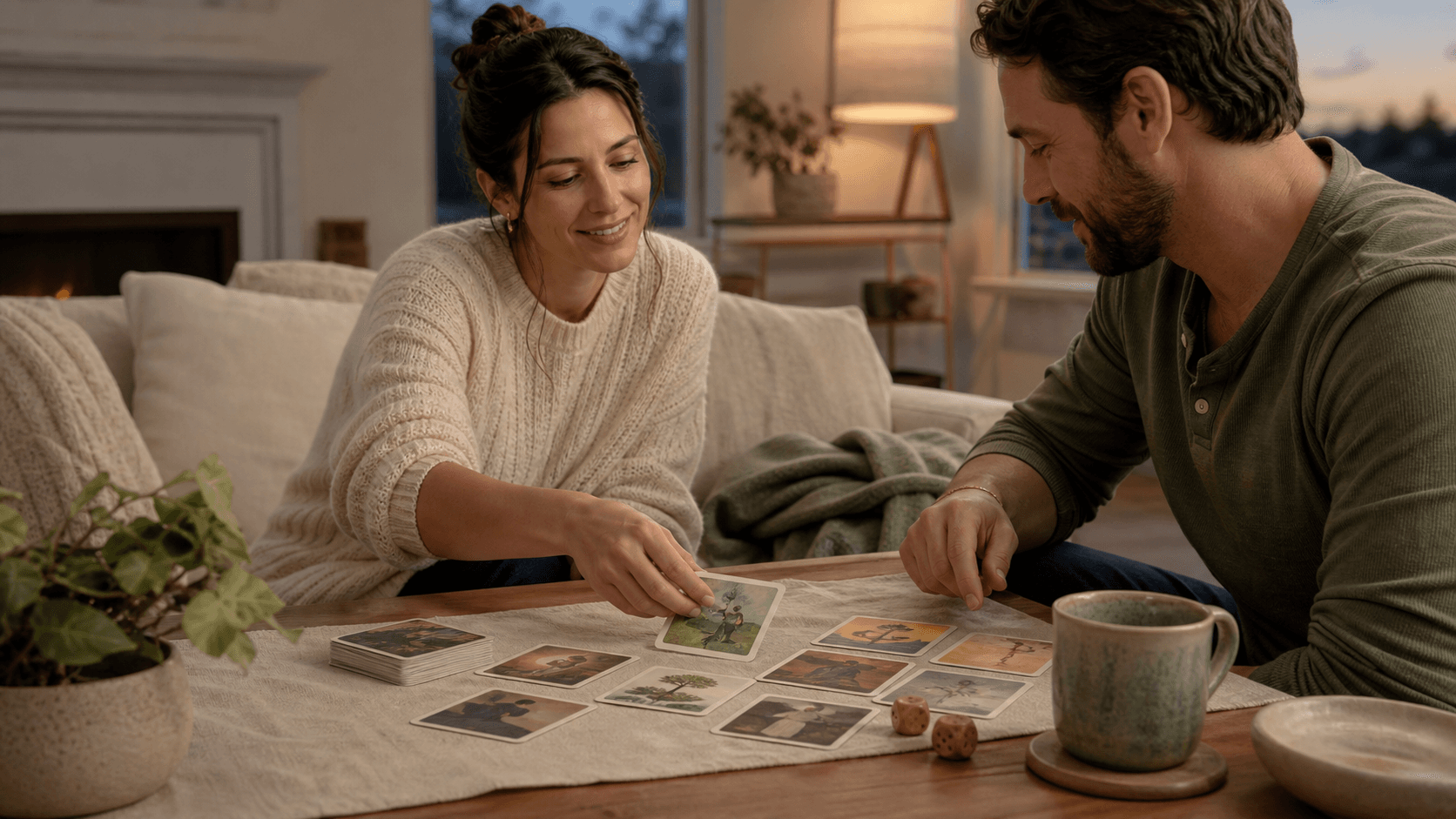
Physical games interrupt that drift. When there are cards on the table, puzzle pieces in a bowl, or clue cards moving from hand to hand, people naturally sit closer. Kids who might not talk much about their day will start talking about their next move or their favorite character. Adults who came home tired can relax into the rhythm of a shared task.
Games with stories baked in are especially powerful for that. When there are characters, clues, or little plot twists, kids are invited to do more than win. They get to:
- Ask questions and make guesses
- Practice noticing details and patterns
- Tell the story back in their own words
- Feel brave enough to speak up with an idea
That kind of play lines up with the makers we work with at Main Street Collective. The game and experience creators on our site care about narrative and meaning the way a grandparent cares about the history behind a quilt or other handmade gifts. It is not just about filling time; it is about what grows in that time together.
Easy Game Night Traditions by Age and Season
Good game nights do not have to be elaborate. They just need to fit the people at the table and the moment you are in.
For little ones, the best games are short and silly. Think about:
- Matching cards or simple memory games
- Movement games where they stand up, point, or act things out
- Loose rules that can bend when attention spans waver
At that age, the goal is not fairness; it is laughter and confidence. Grown-ups are mostly there to cheer them on and gently guide the chaos.
Elementary-age kids are ready for a bit more structure. They usually enjoy:
- Simple strategy games, where a choice actually matters
- Cooperative games where everyone wins or loses together
- Early mystery-style games that make them feel "in on" the story
This is a sweet spot for starting family traditions, because kids are old enough to remember what happened last time and ask for a favorite game again.
Teens and grown-ups can handle longer games and deeper stories. That is where you might bring out:
- Team play that lets shy kids pair up with a confident partner
- Games with layered rules that unfold over an evening
- Story-heavy games like at-home escape rooms
The trick is not to force everyone into the same thing every time, but to match the game to the night. Some moments that naturally invite play are:
- Sunday suppers when everyone is already gathered
- Cousin sleepovers that need a focused activity
- Visits with grandparents who like to sit at the table
- Stormy afternoons when plans are washed out
- That quiet stretch between church and supper
Adding tiny rituals can make game night feel as intentional as choosing handmade gifts from small makers. Some families like:
- A certain bowl that only comes out for game snacks
- A candle that is lit only when a game is on the table
- A notebook to record legendary wins, funny misreads, and running jokes
Those little touches signal that what is happening at the table is worth marking and remembering.
Bringing Creative Escape Rooms Home
One of our favorite ways to turn a regular night into family storytime is with creative escape rooms you can play at home. These are story-rich games crafted by real people who write the narratives, design the clues, and test everything with real families around tables a lot like yours.
An at-home escape room is simpler than it sounds. Generally, you:
- Open the box and spread out the pieces
- Read the backstory together, out loud if you like
- Work through puzzles, codes, and clues as a group
- Race a shared timer or challenge rather than each other
Kids get to be the brains as much as adults, because they may spot patterns or quirky details faster than anyone else. That shared problem-solving builds a different kind of confidence than a typical competitive game.
These creative escape rooms fit Southern family life well because they are immersive without being demanding. You can pause for a baby crying, step away to pull a casserole from the oven, or spread the puzzles over a weekend if life gets busy. Our Creative Escape Rooms collection is curated much like our handmade gifts, with attention to who made each game, what story they are telling, and what kind of night it might spark in your own home.
Makers Behind the Games and Why Their Stories Matter
At Main Street Collective, we are based in Mississippi, and we spend time getting to know the makers behind the games and experiences we feature. Before a box reaches your kitchen table, it has usually passed through conversations about where the maker grew up across Mississippi or the broader South, how they started designing games, and what feeling they hope families carry with them when the game is packed away.
These are not faceless companies. They are designers and storytellers working in small batches, tweaking and refining the experience like any craftsperson would. It is the same spirit you find in pottery, small-batch candles, or other handmade gifts, just in a different medium. The craft shows up in the balance of the clues, the fairness of the puzzles, and the way the story unfolds.
When you choose a game from a known maker, you are bringing more than cardboard and paper into your house. You are inviting:
- Their imagination to sit at your table
- Their standards of fairness and challenge into your kids' idea of fun
- Their voice and humor into your family's inside jokes
That kind of trust matters when you are shaping what your children think family time looks like. It also keeps creativity rooted in real Southern communities. Money stays closer to home, and the stories told around your table were written by neighbors and fellow Southerners, not by people who have never heard a katydid on a summer night.
Turning One Game Night Into a Family Habit
The best way to build a family game tradition is to start small. One game night this month is plenty. One creative escape room pulled out for a birthday weekend or school break is enough to see how your people respond. One new game each season can grow alongside your kids and their changing interests.
From there, you can gently build on what works:
- Let kids take turns choosing the next game
- Invite grandparents or friends into the rotation
- Trade games with close friends so stories and puzzles make the rounds
When you look through Main Street Collective's curated creative escape rooms, we hope you approach them with the same mindset you bring to the rest of our makerplace. Ask yourself: Who made this? What story are they telling? Does this feel like us, right now, in this season?
In the end, the goal is not a picture-perfect, magazine-ready game night. It is a table where people linger a little longer, laugh a little louder, and feel free to be fully themselves. When that happens, the memories made are as honest and handmade as the work of the makers we are proud to stand beside.
Find Thoughtful Handmade Gifts That Truly Feel Personal
Bring your ideas to life with our curated collection of custom handmade gifts that celebrate the people and moments that matter most. At Main Street Collective, we work closely with you so every detail feels meaningful, not mass-produced. Start exploring unique pieces today or reach out to us directly through our contact page if you would like help choosing the perfect gift.
Frequently Asked Questions
What are kid-friendly games that can turn game night into family storytime?
Kid-friendly story games are table games with characters, clues, or plot twists that get everyone talking and guessing. They encourage kids to explain their thinking, retell what happened, and stay engaged even when they are not winning.
How do I start a screen-free family game night tradition at home?
Keep a small basket of games near the kitchen or dining table so it is easy to start playing after dinner. Choose one short game, set a simple time limit, and repeat it weekly so it becomes something everyone expects.
What are the best types of games for toddlers and preschoolers on family game night?
Short, silly games work best for little ones, like matching and memory cards or movement games where they point, act things out, or stand up. Flexible rules matter more than strict fairness because attention spans are still developing.
What is the difference between cooperative games and competitive games for kids?
Cooperative games have everyone working toward the same goal, so the group wins or loses together. Competitive games have players trying to beat each other, which can be fun but may cause frustration for younger kids or mixed-age groups.
How do I choose a game that works for multiple ages, including teens and grandparents?
Pick games that allow team play so younger or shy players can pair up with a confident partner. Story-heavy games and light mystery games also work well because conversation and problem-solving matter as much as speed or skill.