Handmade pottery changes a home in a way mass-produced dishes never quite can. The curve of a handle, the thumbprint in a glaze, the way a bowl sits on a wooden table, all of it adds up to something that feels personal and grounded. For those of us rooted in the South, that feeling matters. It connects our everyday routines to the land under our feet and the people who shape it with their hands.
In this article, we're talking about Southern pottery and the studios that keep it alive, including a special Hattiesburg spot, The Wheel in the Window Pottery Studio. We'll talk about why handmade pottery belongs in a Southern home, what it's like to take a pottery class in Hattiesburg, and how pieces move from studio shelves into the online home of Main Street Collective. Our hope is simple: to help you see pottery not as decor, but as everyday art that becomes part of your story.
Southern Clay, Southern Stories
Handmade pottery just feels different when you set it down in a Southern kitchen. The weight of a stoneware mug on a pine table, the soft irregular rim of a serving dish, the faint swirl where the clay remembered the wheel, all of that sits right alongside chipped family plates and handed-down cast iron. Factory-made pieces can be pretty, but they rarely carry the same quiet warmth.
Southern pottery has deep roots in practical work. Clay was turned into jugs, crocks, and dishes meant to be used hard and often. That history still matters, because it reminds us that handmade things do not have to be precious to be meaningful. They can be sturdy, simple, and honest, and still carry beauty.
At Main Street Collective, we see ourselves as Mississippi-rooted neighbors in this story. We host handmade Southern work online, but we stay close to the makers, not just their pieces. We know who is firing late at night, who is testing a new glaze, who is teaching the next beginner class. That connection shapes everything we do.
As we walk through this article, we'll talk about bringing handmade pottery into your home and also about what happens when you step into a local pottery class in Hattiesburg that folks already recommend to their friends. Both paths lead to the same place: a home filled with pieces that feel like they belong to you.
Why Handmade Pottery Belongs in a Southern Home
One handmade mug on your shelf can quietly shift the way you move through your day. You reach for it on purpose, not by accident. You notice the way the glaze pools at the bottom, the way the handle fits your fingers, the way it keeps your coffee warm. That small moment of attention changes the whole mood of a morning.
In a Southern home, pottery weaves itself into familiar rituals:
- Morning coffee on the porch in a mug you picked out yourself
- Sunday suppers served from a single big bowl that comes out every week
- Neighbors dropping by and being handed sweet tea in mismatched handmade cups
- Holiday tables where a locally made platter sits among old family pieces
Southern pottery carries more than color and form. It carries local clay dug from nearby ground, shaped by hands that know this humidity and this heat, and glazed in colors pulled from our own pine forests, red dirt, and wide skies. That's why it feels so natural on a Southern table.
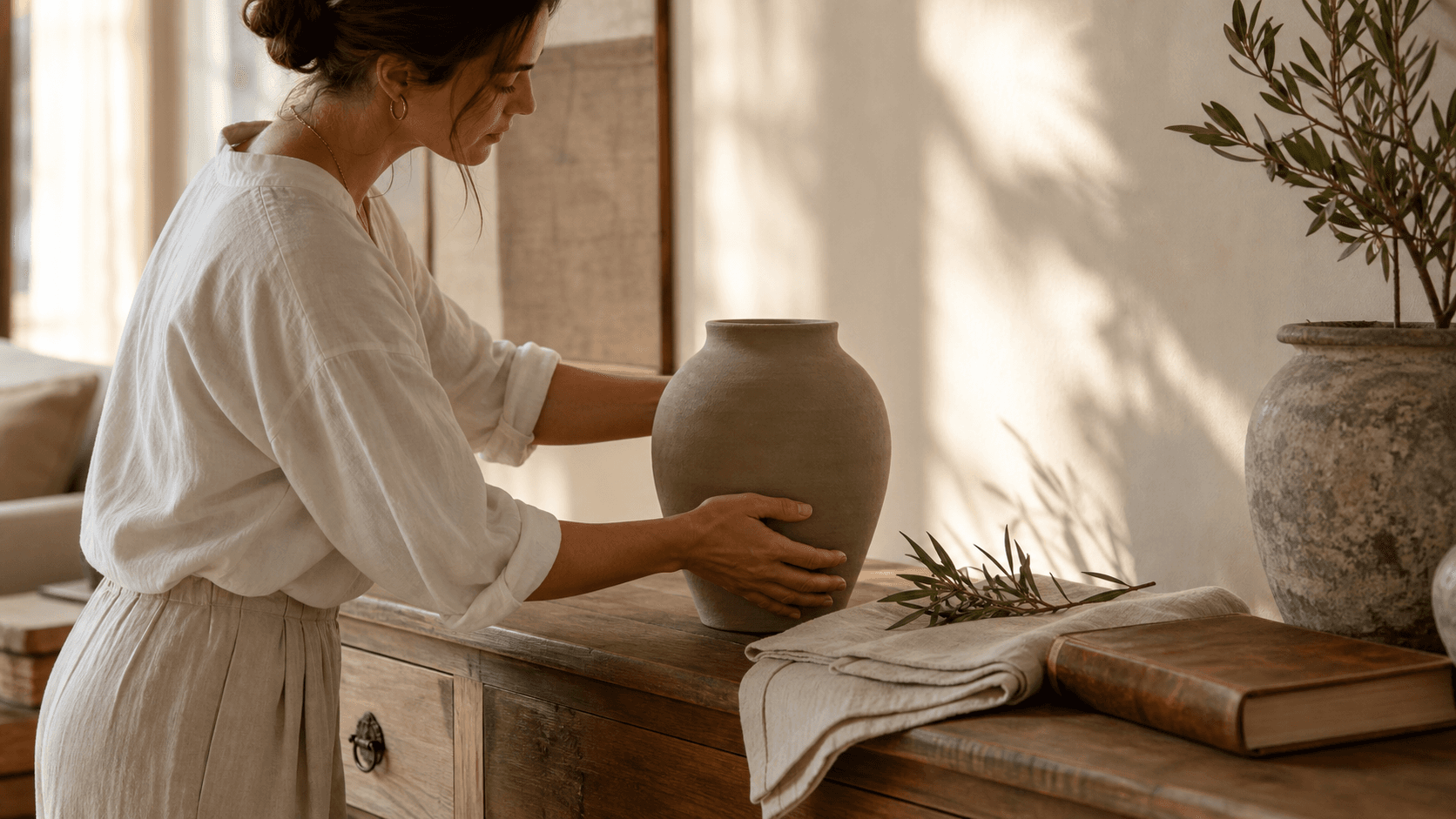
Handmade pieces around the house do something similar. They soften a space, make it feel lived in instead of staged. A slightly uneven vase on a mantle tells you that a real person made it, and another real person chose it. That kind of presence cannot be faked.
Inside the Wheel in the Window Pottery Studio
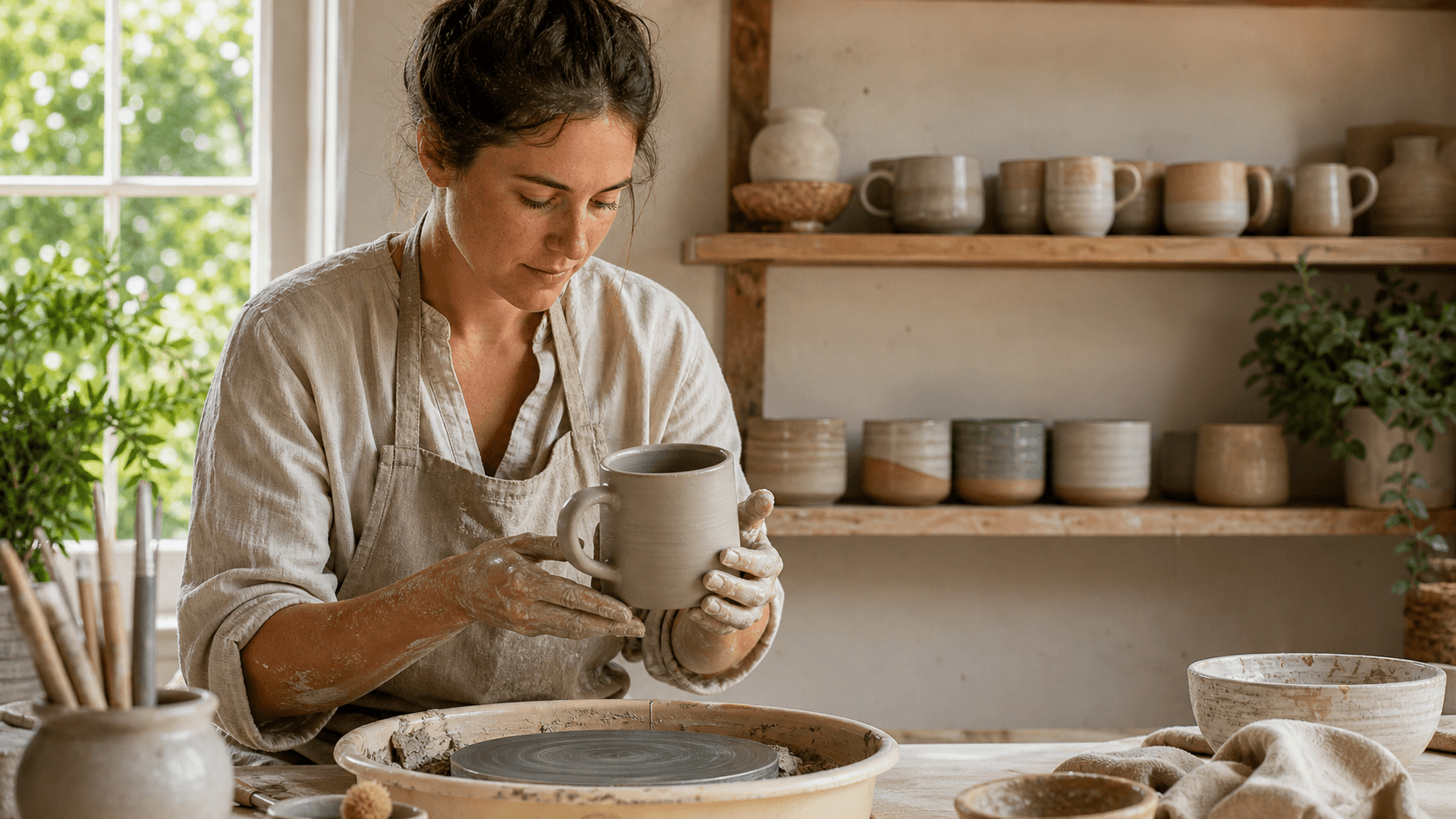
The Wheel in the Window is not just a shop where you pull a finished piece off a shelf. It's a working pottery studio in Hattiesburg, a place where clay dust lingers in the air and wheels hum along while people learn, laugh, and sometimes wrestle with a stubborn lump of mud.
When you walk in, you might see:
- Shelves of pieces at every stage, from soft gray forms drying slowly
- Greenware waiting to be bisque fired, each one tagged with a name
- Glaze buckets lined up along a wall, with drips and splashes telling their own story
- A row of wheels, some spinning, some quiet, always ready for the next student
Studios like this are anchors in the creative community. They're where people try something new, make mistakes in public, and still feel welcome to come back. At Main Street Collective, we're proud to cheer on spaces like The Wheel in the Window because we know how important they are for Southern pottery as a living tradition, not just a finished product.
It's no surprise that folks around town looking for a pottery class often end up here. Word travels through friends, family, and people who wander in curious and leave with a new hobby and clay under their nails.
What a Pottery Class in Hattiesburg Feels Like
A pottery class does not start with instant masterpieces. It usually starts with a slightly lopsided cylinder and a lot of laughter. In a typical class, you might:
- Learn how to wedge your clay so it's ready for the wheel
- Center the clay, which is as much about patience as it is about strength
- Practice pulling walls, shaping bowls or cups by feel as much as sight
- Try handbuilding, using slabs or coils to make forms off the wheel
- Trim and refine your pieces once they are leather hard
- Choose glazes, then wait while the kiln does its quiet, hot work
Beginners get hands-on guidance, not just instructions shouted from across the room. You'll be shown how to fix a collapsing wall, how to keep your hands steady, how to know when to stop. Those with more experience can dig into finer details, like rim shapes, foot rings, or layered glazes.
You'll find all kinds of people in a Southern pottery class. College students needing a break from screens, parents wanting something they can do with older kids, retirees finally trying that thing they always said they would, and locals who simply feel drawn to clay. Before long, you realize this is not just about making pots; it's about giving yourself time to slow down.
The best part is what you carry home. Those first bowls and mugs might not be perfect, but they're yours. They can live on your shelf as everyday pieces or become gifts you hand to someone with a story already attached.
From Studio Shelves to Main Street Collective
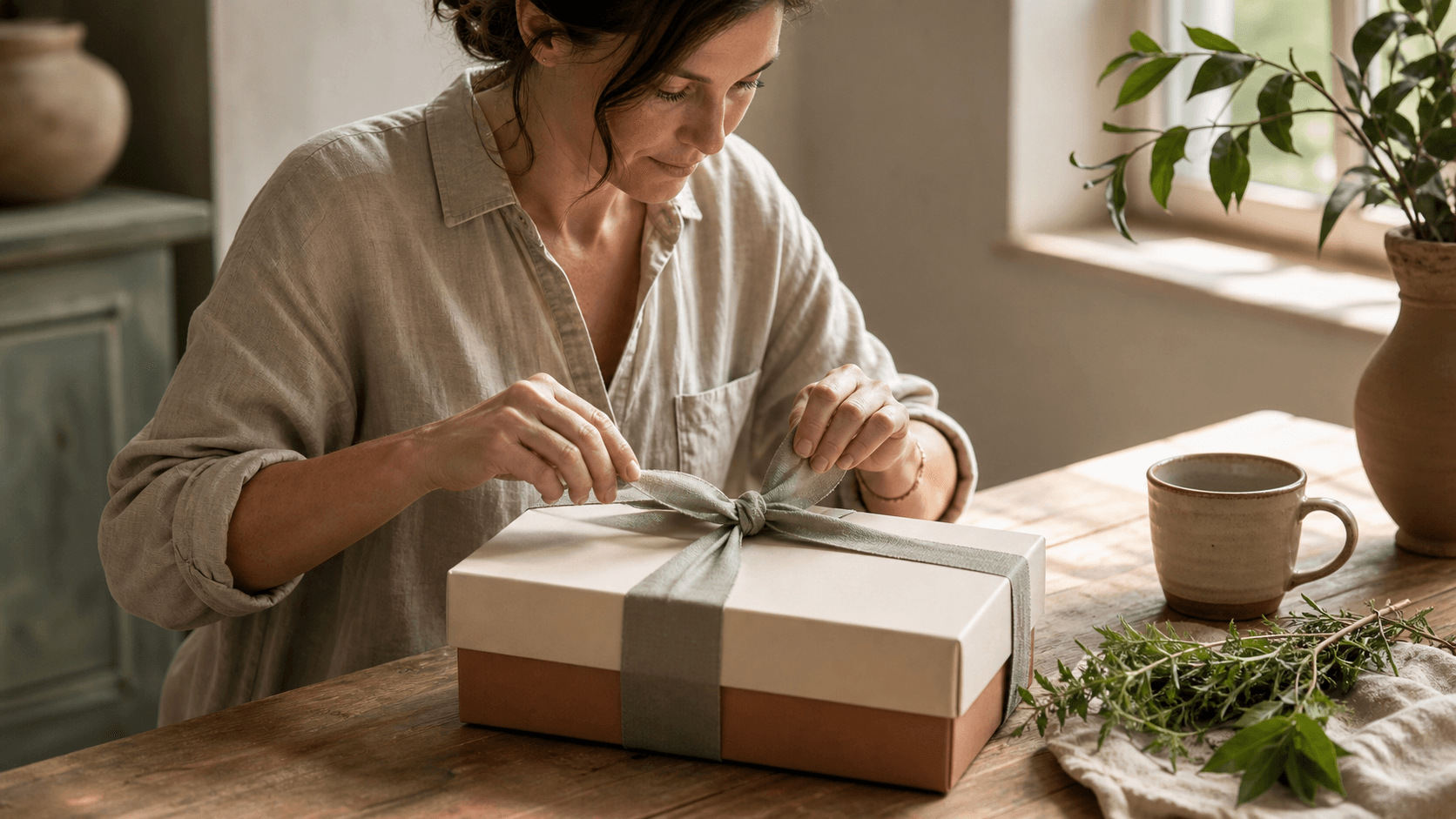
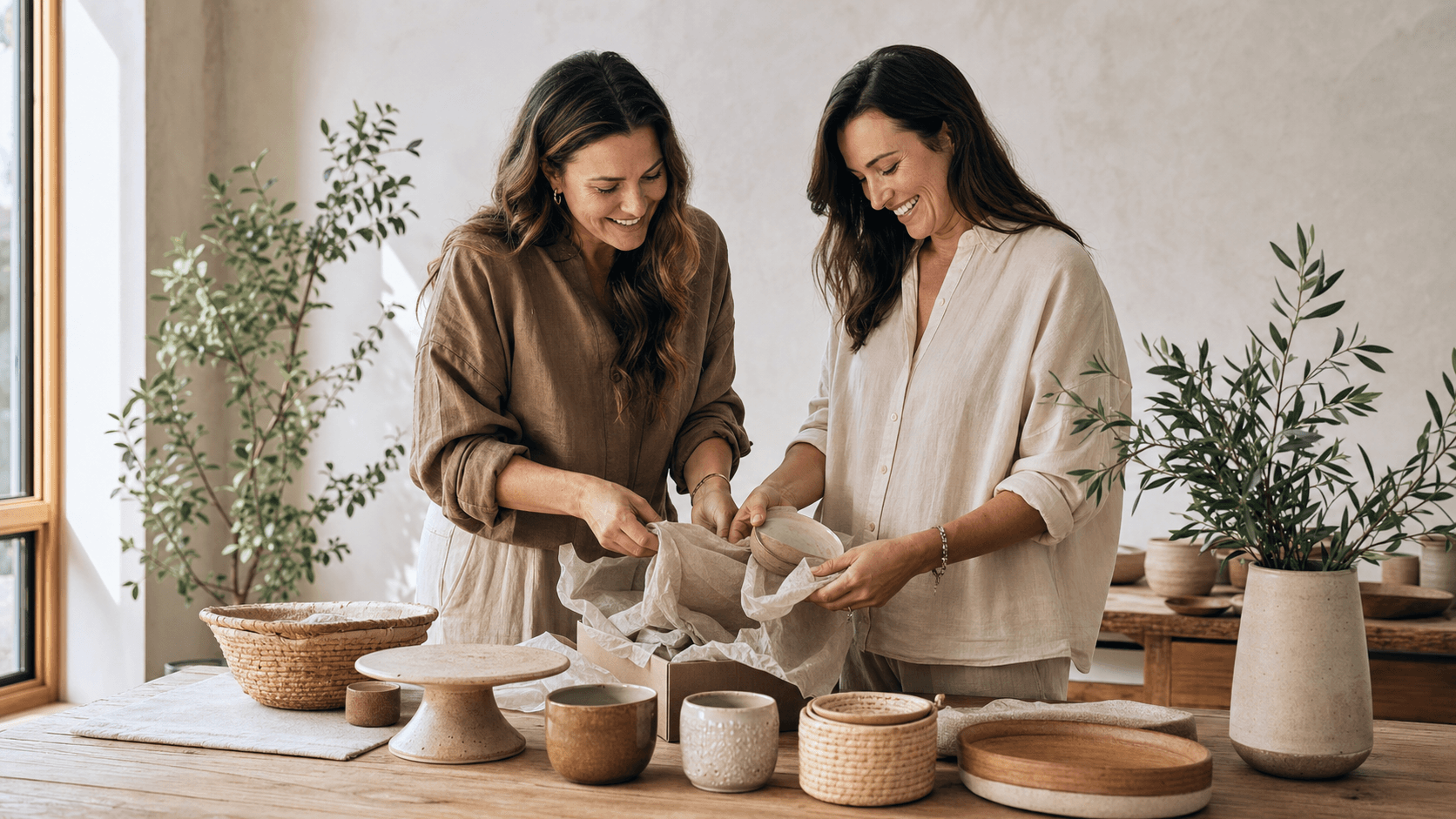
So how does a mug that started on a wheel in a small studio find its way to someone's kitchen cabinet without losing its story? That question matters to us. We believe the path from studio to shelf should keep the maker in full view.
At Main Street Collective, we work directly with Southern makers so each piece is introduced with real details, not canned product language. A pot from a studio like The Wheel in the Window carries:
- The maker's name, not a factory code
- The marks of a specific firing, glaze choice, and style
- The small irregularities that prove it was made by hand, not stamped out
People looking for a new favorite mug or a serving bowl for Sunday suppers can find work from across the South while still supporting real studios and small businesses. It's not about mass retail. It's about knowing, even from a distance, whose hands shaped the clay you wrap your fingers around.
Choosing Pottery That Feels Like You
When you're picking out handmade pottery, it helps to think less like a collector and more like someone setting a table for real life. You might ask yourself:
- Color: do you want soft neutrals, deep earth tones, or bright glazes?
- Texture: do you prefer smooth porcelain or the grip of sandy stoneware?
- Weight: do you like a solid, hefty mug or something light and delicate?
- Daily rhythm: will this piece live in your sink most days or only come out for guests?
Buying something because it's trendy usually means it will end up in a cabinet later. Choosing a piece because it fits how you actually live tends to make it a favorite. Maybe that's a low bowl for gumbo, a small tumbler for evening tea, or a generous serving platter that sees duty at every potluck.
A good mix can be powerful. You might bring home finished pieces from studios and then make a few of your own in class. That way, your shelves hold both the work of makers you admire and your own early, endearing experiments. Over time, those dishes and gifts often become the items people keep for decades.
Bringing Southern Pottery Into Your Routine
Bringing Southern pottery into your life is not about decorating, it's about paying attention. That might look like taking a class at The Wheel in the Window when you're local or passing through Hattiesburg, or it might mean seeking out regional makers wherever you live. It can be as simple as replacing one mass-produced dish with a handmade piece and seeing how that changes your day.
Handmade art can be quiet and practical. A bowl that holds Tuesday night leftovers, a mug that sees you through long conversations, a vase that keeps roadside flowers on your table, each one is an invitation to slow down. When we choose pottery shaped by Southern hands, we're also choosing to support the makers who are building the next generation of everyday art, one wheel turn at a time.
Discover Unique Handmade Art That Supports Local Creators
Explore our curated handmade art marketplace to find one-of-a-kind pieces that bring character and meaning to your home or business. At Main Street Collective, we work closely with independent artists so every purchase directly supports their craft. If you have questions about becoming a vendor or sourcing custom work, please contact us and we will help you get started.
Frequently Asked Questions
Why does handmade pottery feel different from mass-produced dishes?
Handmade pottery often shows small variations like a thumbprint in the glaze, an irregular rim, or a handle shaped to fit the hand. Those details make each piece feel personal and give everyday routines a more grounded, lived in feel.
What makes Southern handmade pottery unique?
Southern pottery is rooted in practical, everyday ware like jugs, crocks, and serving dishes made to be used often. Many makers draw inspiration from the local landscape and climate, using shapes and glazes that feel at home in Southern kitchens.
How do I start using handmade pottery in my home without replacing everything?
Start with one or two pieces you will use daily, like a mug, a cereal bowl, or a serving dish. Mixing handmade pottery with existing dishes works well and can make a table feel warm and collected over time.
What is a pottery studio class like in Hattiesburg?
A pottery class in Hattiesburg typically takes place in a working studio where wheels are running and pieces are drying on shelves. Beginners learn hands on, and you may see items in progress like greenware waiting for a bisque firing.
What is the difference between handmade pottery and factory-made ceramics?
Handmade pottery is shaped and finished by an individual maker, so each piece has subtle differences in form and glaze. Factory-made ceramics are produced in uniform batches, which makes them consistent but usually less personal and less one of a kind.