Coming Home to Real Skincare
Most of us first learned about skincare from a bar of soap by the sink and a jar of something simple on the dresser. No steps, no serums, just what your people trusted because it worked. That kind of everyday, no-fuss care is still what many Southern families reach for, especially in small towns where goats in the pasture and a side of beef in the freezer are part of regular life.
At Main Street Collective, we pay attention to those older ways of caring for skin. Goat milk soaps and tallow lotions have long been quiet standbys in Southern homes, especially across Mississippi and the neighboring states. They never really went away; they just stayed closer to the farm kitchen than the beauty aisle.
We spend our time getting to know small-batch, Southern handmade makers and bringing their work together in one quiet corner online, so you do not have to dig through endless mass-market listings to find a bar cut by hand or a jar poured in a home studio. In this piece, we are walking through different styles of goat milk soaps and tallow lotions you will find here, how they are made, and the real people behind them. This is about land, animals, and the hands that stir each batch, not buzzwords or trends.
Why Goat Milk and Tallow Still Matter in a Modern Bathroom
Goat milk has been a workhorse in Southern soapmaking for generations. On small farms, it was natural to take some of that fresh milk and pour it into the soap pot. In a bar of soap, goat milk adds:
- Gentle cleansing that does not feel harsh or squeaky
- A creamy, cushiony lather that feels soft on the skin
- Naturally occurring fats that help skin feel less tight after washing
- A sense of familiarity if you grew up around dairy animals
Tallow is simply rendered beef fat, cleaned and slowly cooked until it becomes a pure, stable fat. Southern families used it in soaps, salves, and kitchen chafing dishes long before skincare became a category. Many of the makers we work with still reach for it because:
- It makes lotions that feel deeply moisturizing and long-lasting
- It is naturally rich in fats that sit comfortably on the skin
- It pairs well with simple oils like olive or jojoba
- It connects their work directly to local cattle farms and butchers
Many Southern handmade makers know the exact farms they buy from, and some know the herd personally. They know when the goats freshen, which pasture they favor, or which cattle line produced the tallow they are rendering that week. That connection shows up in how slowly they work and how small their batches are.
When you compare that to a long ingredient list on a typical store bottle, it feels different. We are not here to create fear around lab-made ingredients, but there is something steadying about being able to recognize the first few words on the label. You know what you are putting on your skin, and here, you can also know who made it. For people who prefer fewer, better things on the counter instead of a cabinet full of half-used bottles, goat milk soaps and tallow lotions fit right in.
Meeting the Soap Makers Behind the Bars
The goat milk soaps on our shelves come from a small circle of Southern handmade makers we talk with, whose farms and studios we can picture when we unpack their boxes. Each bar carries traces of their daily life, from early-morning milking to late-night cutting and stamping.
You will see a few main approaches show up again and again:
- Simple, unscented or lightly scented bars that are kind to sensitive or dry skin. These often come from Mississippi or nearby makers who lean on basic recipes, goat milk, gentle oils, and little else. Many of them started with a child or loved one whose skin reacted to everything on the drugstore shelf and slowly refined a recipe that just felt calm.
- "Southern kitchen" scented bars that smell like a porch or herb garden. Think lavender tucked into linen drawers, rosemary near the back step, lemon or sweet orange slices on the cutting board. Makers might tuck in dried herbs from their own yards or infuse oils with local botanicals, then swirl that into creamy goat milk soap that brings a bit of yard and kitchen to your shower.
- Working hands bars made for gardeners, mechanics, artists, and anyone washing up from real work. These might include charcoal, clay, or a bit of fine grit from ground oats or seeds, so the bar cuts through stubborn dirt while the goat milk keeps hands from feeling stripped.
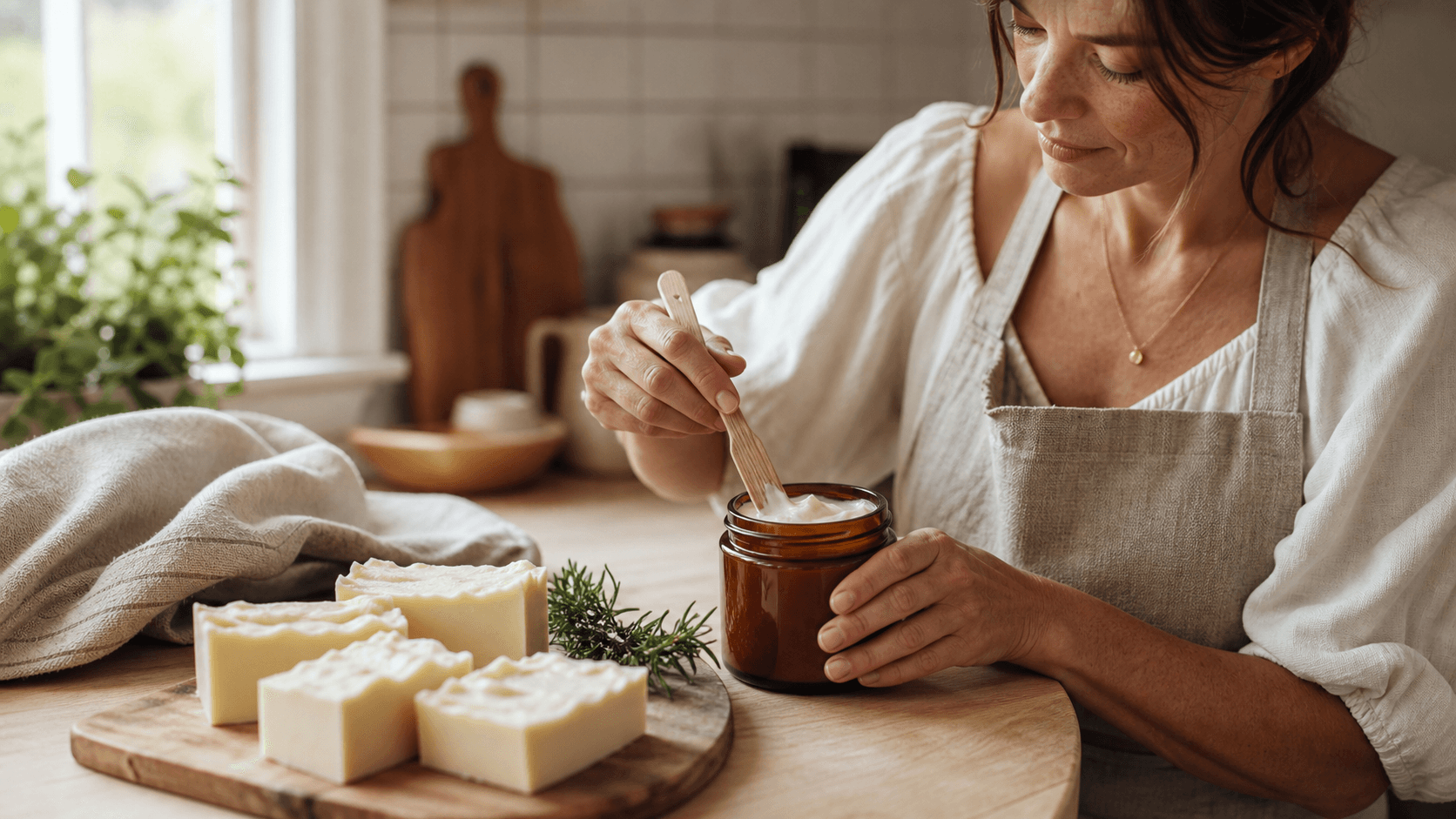
Behind each style is a real routine. Someone is up before the sun, checking on goats, straining milk, and setting aside a portion for the next soap batch. Oils are warmed on a stove, molds are lined by hand, and each loaf is sliced, turned, and cured on racks until it is ready to ship. The product photos on our site show those actual bars, with their natural swirls and edges, not airbrushed stand-ins from a photo studio. What you see is what came off the drying rack in a maker’s workroom.
Slow-Made Tallow Lotions That Feel Like Care
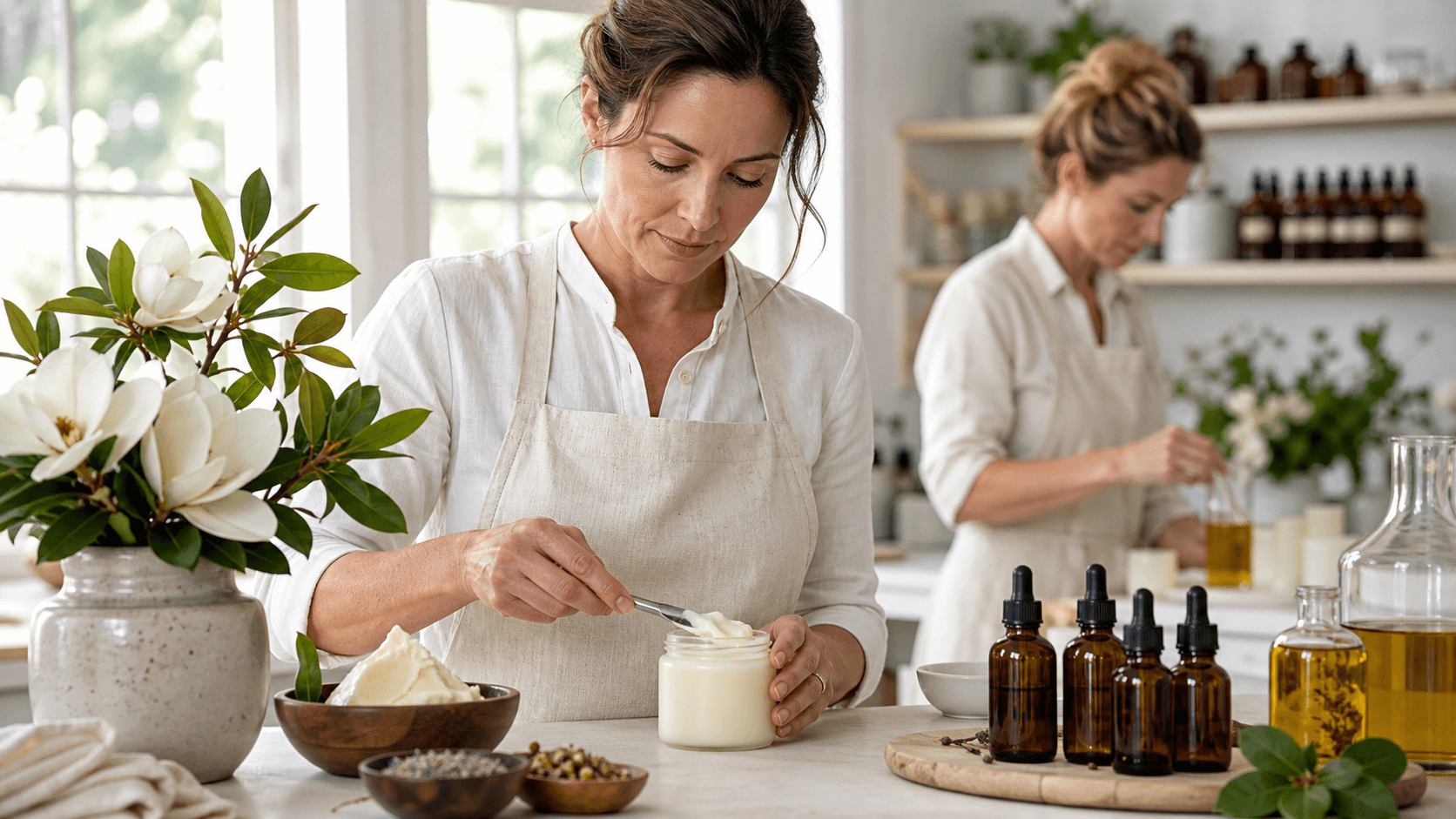
Right alongside the soaps, you will find tallow lotions and balms that feel steady and familiar, the kind of thing a grandmother might have kept in a jar by the bed. The process starts with rendering tallow carefully, skimming and straining until the fat is clean and pale. Makers then blend it with oils like olive or jojoba, sometimes adding local beeswax for body, and finish with a hint of essential oils or keeping it completely plain.
Among the tallow pieces we carry, a few types show up often:
- Plain or lightly scented tallow creams meant for nightly use on the face or hands. These are soft, scoopable creams that melt on contact and sink in slowly, made by Southern makers who prefer a short ingredient list and quiet formulas.
- Rich, salve-like tallow balms for cracked heels, elbows, and hard-working hands. These often come in tins or small jars, meant to be warmed between your fingers and pressed into the driest spots. Some of our Mississippi-based makers lean on these for their own families through winter and long days outside.
- Seasonal or small-batch scented tallow jars that use herbs or flowers the maker grows or gathers. You might see calendula petals from a backyard patch, pine needles from a nearby woods, or mint that has taken over a garden bed. These runs are usually limited, and each jar feels tied to a particular corner of land.
The photos you see of these tallow creams and balms are honest. You can see the texture, the natural off-white or pale gold color, sometimes even the swirl left by the spoon used to fill each jar. It gives you a clear sense of what you are inviting into your routine before the lid ever arrives at your sink.
Choosing Southern Small-Batch Skincare for Your Skin
If you are new to goat milk soap or tallow lotion, it helps to start simple. We usually suggest pairing one goat milk bar with one tallow product and living with them for a few weeks. Let your skin, and your habits, settle into the new rhythm.
For different skin needs, a few plainspoken guidelines help:
- Very sensitive or reactive skin: begin with unscented or single-note goat milk soaps and plain tallow creams. Avoid strong essential oil blends at first and keep your routine very simple.
- Dry or mature skin: look toward creamier goat milk bars that include extra oils, plus richer tallow lotions or balm sticks for night. Focus on pieces described as deeply moisturizing rather than clarifying or oil-cutting.
- Oily or combination skin: try lighter goat milk soaps, especially bars that mention clay or charcoal, and use a very small amount of tallow balm only at night on any dry patches. Watch how your skin responds before adding more.
Buying from Southern handmade makers also means you are never far from a human answer. These are real people who can tell you what went into a specific batch, what changed from the last run, and why they chose each ingredient. We encourage starting with one or two pieces, reading the maker stories, and paying attention to how their daily lives show up in the products. This approach is less about chasing quick fixes and more about settling into a routine that feels honest, steady, and rooted in real work.
Supporting Southern Handmade Makers with Every Bath and Balm
When you pick up a goat milk soap or tallow lotion from Main Street Collective, you are placing real labor from a Southern household into your everyday rituals. Washing your hands with a bar you can trace back to a small studio or farm feels different from using a nameless bottle with a marketing slogan on the label.
We keep our goat milk soap and tallow offerings small and intentional, more like walking through a hometown shop where you recognize the last names on the shelves than scrolling a big-box website. Take time with the maker bios, look closely at the product photos, and choose one or two pieces that feel like they could live quietly on your sink or nightstand. Every bar and jar is a small decision about the kind of world we want to live in, one that is slower, more local, and more connected and every purchase helps keep Southern handmade makers and their traditions going strong.
Discover Authentic Southern Craftsmanship For Your Home
Explore the stories, skills, and passion behind our community of Southern Handmade Makers and find pieces that feel as good as they look. At Main Street Collective, we carefully curate goods that reflect real artisanship and genuine local character. If you have questions about a piece or need help choosing the right maker for your style, contact us and we will be glad to help.
Frequently Asked Questions
What is goat milk soap, and why do people like it?
Goat milk soap is a bar soap made with goat milk added to the soap pot. Many people like it because it cleans gently, makes a creamy lather, and can leave skin feeling less tight after washing.
What is tallow lotion, and is it made from beef fat?
Tallow lotion is a moisturizer made with rendered beef fat that has been cleaned and slowly cooked into a stable, usable fat. It is valued for feeling deeply moisturizing and long-lasting on the skin.
What is the difference between goat milk soap and regular store-bought soap?
Goat milk soap often focuses on simple recipes and can feel less harsh or squeaky on the skin. Many handmade versions also come in small batches with shorter, more recognizable ingredient lists than typical mass-market soaps.
Are unscented goat milk soaps better for sensitive or dry skin?
Unscented or lightly scented goat milk soaps are a common choice for people with sensitive or dry skin because they avoid strong fragrance and keep the formula simple. Many makers develop these bars after trying to find something that feels calm and non-irritating.
How do I choose between goat milk soap and tallow lotion for dry skin?
Goat milk soap is for cleansing and can help skin feel less tight after washing, while tallow lotion is for moisture that lasts after you dry off. For very dry skin, many people use a gentle soap first and then apply a tallow-based moisturizer to seal in comfort.