Finding What Is Real in a Sea of Choices
Finding authentic goods should feel simple, but it often does not. We scroll past page after page of pretty photos, and after a while everything blends together. The same rustic font, the same warm lighting, the same claim that something is "handmade." It gets hard to know what is real and what just looks the part.
That is where intention matters. Authentic goods are about more than a buzzword or a trendy label. They are about the person who made the thing, the place it came from, and the process that shaped it. Here in the South, we are used to front porches, face-to-face talks, and knowing who baked the pie or turned the wooden bowl. That old habit still matters, even when we are shopping on a screen. Our goal here is to help you spot what is real, what is worth bringing home, and how to shop with more peace instead of more stress.
What Makes Something Truly Authentic
When we talk about authentic goods, we are really talking about people. A real person, with real hands and a real story, made that item. You can feel that when you hold something that has been shaped, stitched, poured, or carved by one maker who cares how it turns out.
A few simple signs often show up in authentic work:
- Slight variations from piece to piece
- Small signs of handwork, like tool marks or uneven glaze
- Clear description of materials that sound plain and honest
- A maker's name and a bit of their story
Authenticity shows in the details. The glaze is not perfectly flat, the wood grain does not match edge to edge, the embroidery has little quirks. These are not flaws; they are proof that a person touched it.
The maker is present too. You know who they are, where they are from in the South, and what pulled them toward clay, cloth, paper, or metal. You might learn they started in a family kitchen, or in a tiny shop off a town square. It feels like someone talking, not like a slogan.
Copycat "handmade-style" goods feel different. They tend to hide behind:
- Generic product pages
- Vague phrases about "artisans" but no real names
- Buzzwords with no story to back them up
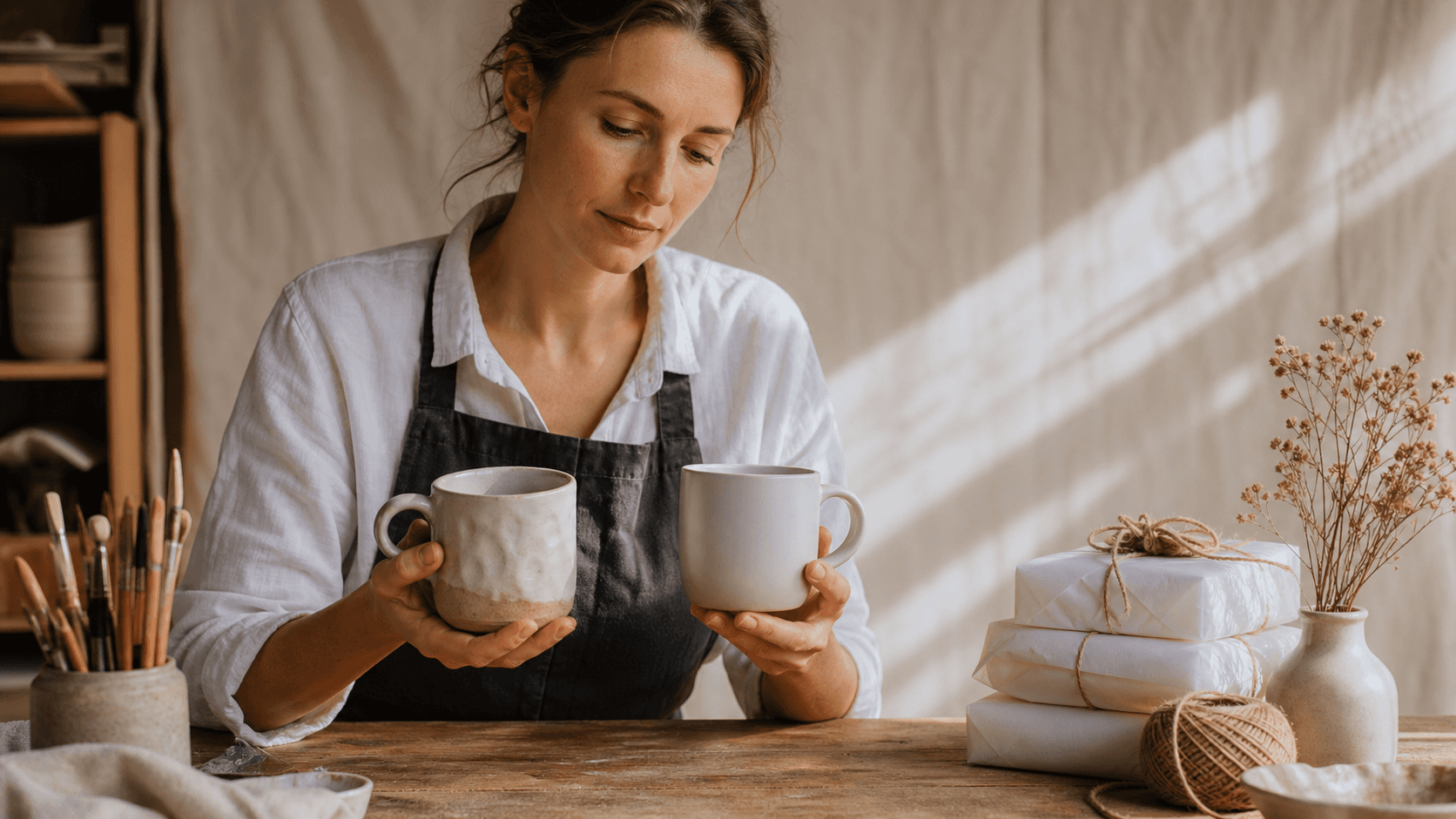
Authentic goods are not about perfection, they are about honesty. Connection lives in the slight wobble of a hand-thrown mug or the uneven edge of a hand-cut board. That is what makes the piece feel like it belongs with you.
Reading Between the Lines When You Shop Online
Shopping online does not have to mean guessing in the dark. You can read between the lines and pick up small clues that tell you if something is truly handmade or just dressed up that way.
Green flags to:
- Maker profiles with names, faces, and real words
- Photos of the studio, workbench, or kitchen, not only styled shots
- Product descriptions that talk about process, not just "features"
Red flags that hint at mass-made goods:
- Stock photos used again and again
- The same description copied across lots of different items
- No mention of who made it or where it comes from
The word "handmade" can be used loosely. When it is real, you will often see time, skill, and limits. The maker might say how many they can make in a month, how long a batch takes to dry, or what happens when a glaze misbehaves. When it is stretched, you will see big claims with no details.
It helps to slow down and ask yourself a few questions:
- Who made this, and do I know their name?
- Where are they working from, and does that place show up in the story?
- How long have they been doing this craft?
- Do they talk about mistakes, learning, or changes over time?
Those little bits of information add up. They help you build trust and a clearer picture of what you are inviting into your home.
Why the Story Behind Southern Goods Matters
Here in the South, we tend to tie objects to memory. Recipes are passed down on stained cards, quilts remember family hands, and small-town main streets hold layers of stories in every brick. That same spirit runs through Southern handmade goods.
Many Southern makers work with what is around them:
- Red clay pulled from the nearby ground
- Local wood with knots and swirls from native trees
- Regional herbs, fibers, or flowers
- Patterns and sayings that echo family history
When you buy from a real Southern maker, you are not only getting a candle, mug, or cutting board. You are holding early mornings at the workbench, late nights at the kitchen table, and all the trial and error it took to get there. The price is not only for the thing you can touch, it is for the years of practice and the roots behind it.
Knowing that story changes how we use what we buy. A hand-thrown serving bowl might only come out for summer suppers on the porch. A hand-stitched linen towel might hang in the kitchen where everyone will see it. When we know the story, we tend to care for the piece, and it becomes part of our own gatherings.
Choosing Fewer, Truer Pieces This Summer
Late spring and early summer are a natural time to reset. Windows open, light lingers a little longer, and many of us feel the urge to clear out crowded shelves and start fresh. That makes it a good moment to think about buying with more intention.
Instead of filling a cart in a rush, we can pause and ask:
- Does this piece have a real maker behind it?
- Is there a place tied to it, not just a warehouse?
- Is this a story I want to bring into my home and stand behind?
When we choose fewer, truer pieces, we leave more space in our homes and in our budget for what matters. Buying from small Southern businesses also keeps money closer to home, supports families, and helps hold onto craft traditions that could fade if we ignore them.
Curated spaces built around real makers make this easier. Instead of wading through endless pages of random listings, you step into a smaller room where someone has already met the makers, heard their stories, and chosen with care. At Main Street Collective, that is the kind of online "room" we work to create, so each item already carries a name, a place, and a process.
Shop Like You Are Walking Down Main Street
One helpful mindset shift is to shop online like you are walking a real main street in a small Southern town. You would probably stroll, not rush. You would peek in windows, step inside the shops that catch your eye, and maybe chat with the person behind the counter.
You can bring that same slow, curious spirit to your screen. Look for maker stories. If you can, ask questions. Notice the people whose work you want to support again and again, the ones whose words feel honest and grounded.
A simple way to start is to choose one small corner of your life:
- Your morning coffee mug
- The bowl you use for summer fruit
- The notebook where you write thank-you notes
Swap in one authentic, maker-made piece there. Live with it, use it, notice how it feels to hold something with a story. At Main Street Collective, we build around that idea, with real Southern makers, small batches, and a curated community instead of a crowded marketplace. Every time we choose authentic goods, we cast a quiet vote for how things are made, who is supported, and what kind of stories we welcome into our homes.
Discover Authentic Goods That Support Real Makers
Explore our collection of thoughtfully crafted authentic goods and see the stories behind every piece. At Main Street Collective, we carefully select items that reflect real craftsmanship and genuine character for your home and life. If you have questions or need a personal recommendation, you can contact us and we will be happy to help you find something that feels truly yours.
Frequently Asked Questions
What are authentic goods?
Authentic goods are items made by a real person with a clear process, materials, and story behind the work. They often show small variations and signs of handwork that indicate they were not mass-produced.
How can I tell if something is truly handmade when shopping online?
Look for a maker name, a detailed maker profile, and photos of the studio or workbench, not just styled product shots. Strong listings explain materials and process, while vague descriptions and repeated stock photos are common warning signs.
What is the difference between handmade and handmade-style products?
Handmade items are created by an individual maker and usually include real details about who made them, where, and how. Handmade-style products often use the look and buzzwords of handmade goods but provide no names, no process, and generic product pages.
Are small imperfections a sign of poor quality in handmade goods?
Not necessarily, because slight variations like tool marks, uneven glaze, or small quirks can be proof that a person made the item by hand. You should still expect honest materials and solid construction, but perfect uniformity is not the goal of handmade work.
What questions should I ask before buying authentic goods from a maker?
Ask who made it, where they work, what materials they use, and how the item is made. It also helps to ask about production limits or timelines, since real handmade work often takes time and has natural constraints.