Finding Your Way in a Changing Coffee World
Coffee used to be simple for a lot of us. There was a can in the pantry, a scoop in the tin, and you did not think much about where it came from. Then one day, someone handed you a cup that tasted different, almost sweet without sugar, or smoky in a way that reminded you of a campfire. You learned it came from a small roaster, not a factory, and that real people chose those beans and roasted them in tiny batches. That is usually when coffee stops being "just coffee" and starts feeling like something more personal.
Walk down a coffee aisle now and it is a whole new world. Alongside classic beans you will see cold brew, mushroom blends, chicory, and even "coffee" that is actually roasted figs, like the fig-based brews some of our Southern makers have been experimenting with. It can be exciting, but also a little confusing. What does small batch really mean; how do you tell one bag from another; and how do you pick something that fits your life instead of simply following whatever is trending? That is what we are talking through here, from a Southern, maker-focused point of view.
What Small Batch Really Means in Your Mug
The simplest way to think about small-batch coffee is to compare it to food. Around here in Mississippi, most of us know the difference between your uncle's backyard smoked ribs and a quick burger from a drive-thru. Both are food, but only one feels like it came from a real person's hands. Small-batch coffee is that same idea in a mug.
Many Southern roasters and makers work on a scale where they can actually pay attention to every batch. That often looks like:
- Sourcing beans from specific farms or regions instead of anonymous blends
- Roasting in smaller runs so they can tweak time and temperature by feel
- Tasting each roast, adjusting the next one based on what they notice
- Keeping relationships personal, from the grower to the person buying the bag
For you, that matters in very down-to-earth ways. Smaller batches usually mean:
- More control over roast level, so flavors taste intentional, not burnt or flat
- Fresher beans, because they are not sitting in a warehouse forever
- A clearer line back to a person and a place, not just a factory code
When you pick up a bag or read a description, there are a few simple things worth scanning for:
- Roast date, or at least a "roasted on" month
- Origin or blend, even if it is just a region
- Roast level: light, medium, or dark
- A short, plain-language flavor description
Around here, we pay attention to coffees and coffee alternatives that come with a real maker and a real story, not just trendy words on the label. If someone in the South roasted it, blended it, or dreamed it up in their own kitchen, we want that care to show up in your cup.
Choosing Your Roast, Grind, and Brewing Style
Once you know the bag came from real hands, the next step is choosing what actually suits your taste. Roast level is where most folks start. In everyday language, it breaks down like this:
- Light roast: Often brighter, a little more "fruit and sunshine." It can feel almost tea-like and gentle, especially black.
- Medium roast: Balanced and familiar. If you are not sure what you like, this is often the easiest starting point.
- Dark roast: Bolder, toastier, more "campfire." Good if you love cream, sugar, or flavored syrups, since the coffee still holds its own.
How you brew shapes the flavor too:
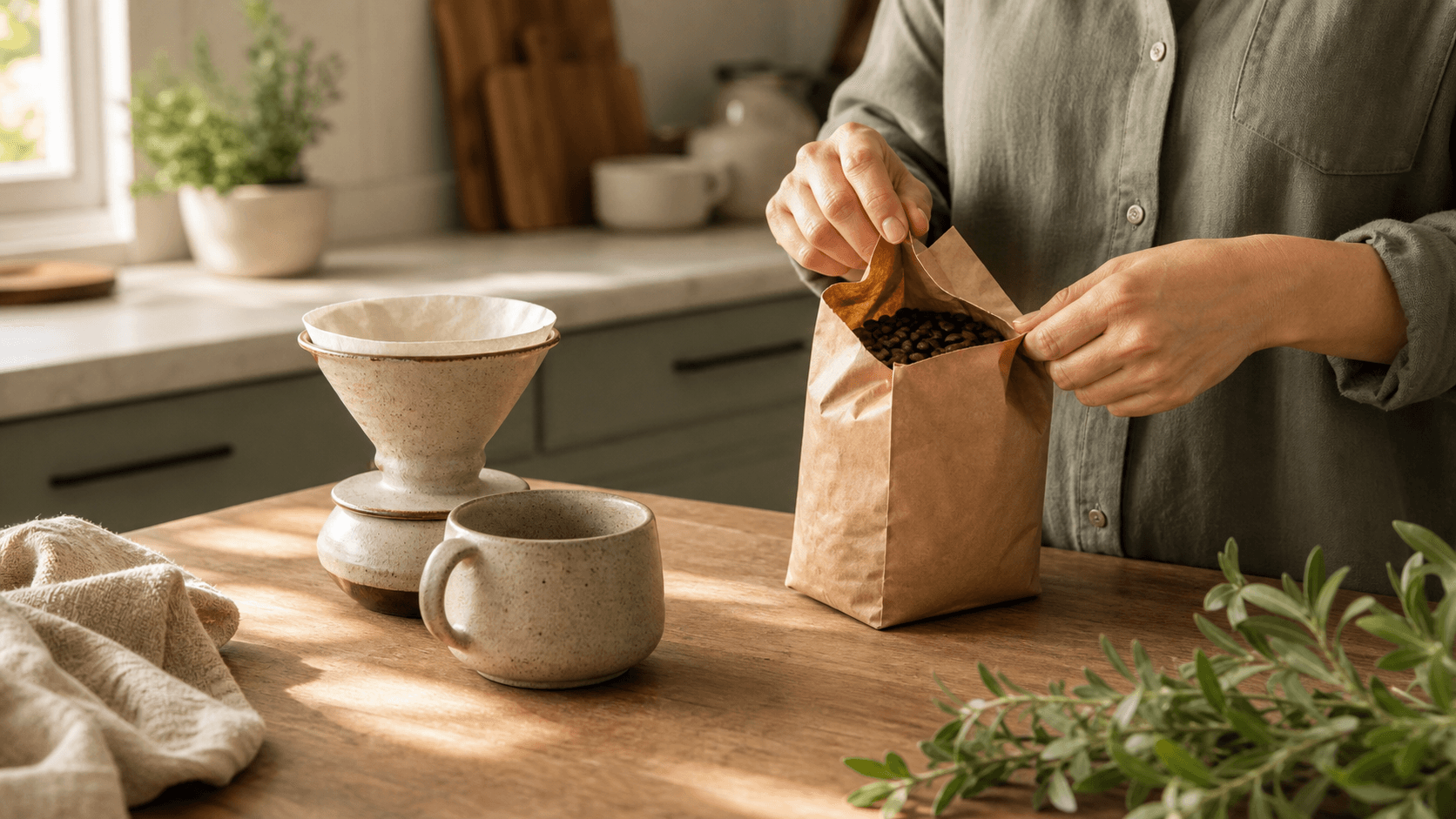
- Pour-over or drip: Clean and clear, good for noticing subtle flavors.
- French press: Fuller, with more body and natural oils.
- Espresso or stovetop moka: Concentrated and intense, meant for small cups or lattes.
Grind size is simply matching the coffee to the method: coarse for French press, medium for drip, fine for espresso. If you do not have a grinder, look for roasters who will grind to order and clearly say which brew method their grind is meant for. That way you are not guessing in the morning before you have even had your first sip.
It also helps to be honest about your actual routine. Do you have ten quiet minutes or two? Do you drink your coffee black, with a splash of milk, or iced in a travel cup on the way to work? Instead of chasing a slow, perfect ritual from social media, choose:
- A roast that tastes good the way you actually drink it
- A format that fits the time you truly have
- A brewing method you will stick with on a Tuesday, not just on a lazy Sunday
Beyond Beans: Figs, Mushrooms, and Gentle Cuppas
Coffee is not the only way to enjoy a warm mug anymore, and small-batch makers are leading a lot of those changes. For people who are sensitive to caffeine, dealing with heartburn, or simply curious, there are gentle alternatives that still scratch that "morning ritual" itch.
Fig-based "coffee" is one example you will see more often. Instead of coffee beans, these blends use roasted figs. That gives you:
- A rich, roasty flavor that feels familiar
- A cup that does not rely on caffeine for comfort
- A way back to a morning habit if regular coffee has become too harsh
Mushroom coffees are another path. Most of the time, these are blends of coffee with mushrooms such as lion's mane, reishi, or chaga. In plain terms, they tend to:
- Taste like coffee with gentle earthy notes
- Feel a bit smoother, sometimes easier on the stomach
- Work as a "bridge" if you want to cut back on caffeine without quitting coffee altogether
Around the South, you will also see other small-batch comforts from makers: chicory blends, herbal coffee-style drinks, and roasted grains or roots that brew up dark and toasty. With anything new, it helps to:
- Start with a small bag or sampler
- Brew it the same way you brew your usual coffee
- Compare honestly: flavor, how your body feels, and whether you miss the caffeine
Reading the Story Behind the Bag
One of the best parts of supporting Southern handmade makers is that there is usually a real story right there on the bag. You can learn who roasted it, where they are from, and what they care about. That tells you more about what is in your cup than a long list of buzzwords ever will.
Many makers will even tell you how they drink their own coffee or fig brew and why they chose those beans, roasts, or ingredients. That kind of detail is far more helpful than vague promises. When you pick up a bag, a simple "story checklist" can guide you:
- Is there a real person or family named?
- Do they say where they roast and where they source, even in general terms?
- Do they explain in plain words what they hope you will taste?
We are Mississippi-rooted, and that sense of place matters. Every coffee, fig-based option, or mushroom blend from our region connects you with someone's work and someone's kitchen, not a faceless production line. You are not just pouring a drink; you are reaching for the kind of care you want to start your morning with.
Bringing It Home: Building Your Own Daily Ritual
You do not have to overhaul your whole routine to enjoy small-batch coffee or alternatives. Start simple. Maybe choose one classic small-batch coffee from a roaster you trust and one gentle option, like a fig-based blend or a mushroom coffee. Keep everything else the same, from your mug to your morning playlist.
Then give yourself a short "taste week." Brew each one the same way each day and pay attention to:
- Flavor words that come to mind, even if they feel simple
- How your body feels an hour later
- Whether you look forward to that cup or feel like it is a chore
In the end, enjoying coffee is not about fancy gear or keeping up with trends. It is about finding a cup that fits your body, your schedule, and your values. Around here, Southern handmade makers pour real time and care into small batches, whether they are roasting beans, figs, or herbs. When your next bag carries a name and a place you recognize, your morning ritual starts to feel less like a habit and more like a quiet way of standing behind the kind of work you believe in.
Meet Local Artisans And Bring Their Craft Into Your Home
Explore the stories, skills, and passions of our southern handmade makers and find pieces that feel as meaningful as they are beautiful. At Main Street Collective, we carefully curate each item so you can shop with confidence, knowing you are supporting real people and their craft. If you have questions about a maker, a product, or an order, you can always contact us for personal assistance.
Frequently Asked Questions
What does small batch coffee mean?
Small batch coffee is coffee roasted in smaller runs so the roaster can pay close attention to time, temperature, and taste. It often comes with clearer information about origin and roast level, and it is usually fresher than coffee that sits in warehouses longer.
How can I tell if a bag of coffee is fresh?
Look for a roast date or a clear roasted on month, not just a best by date. Fresher beans typically taste more lively and less flat, especially when brewed black.
What is the difference between light, medium, and dark roast coffee?
Light roast is usually brighter and can taste fruity or tea like. Medium roast is balanced and familiar, while dark roast is bolder and toastier, often described as smoky or campfire like.
How do I choose the right grind size for my brewing method?
Use coarse grind for French press, medium grind for drip or pour over, and fine grind for espresso. If you do not have a grinder, choose a roaster that grinds to order and labels the grind for your brew method.
What is the difference between pour over, French press, and espresso style brewing?
Pour over and drip brewing tend to taste clean and clear, making subtle flavors easier to notice. French press produces a fuller cup with more body, while espresso or moka brewing is concentrated and intense for smaller servings or milk drinks.